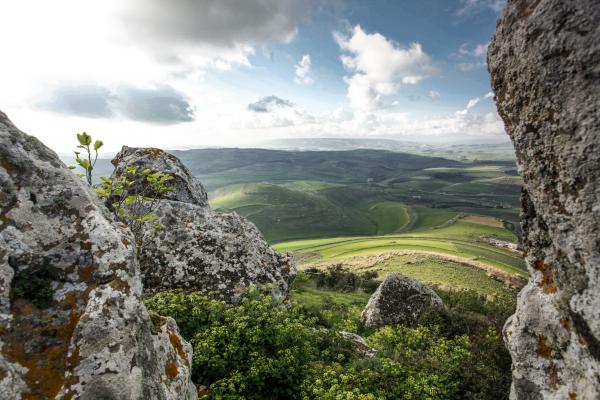
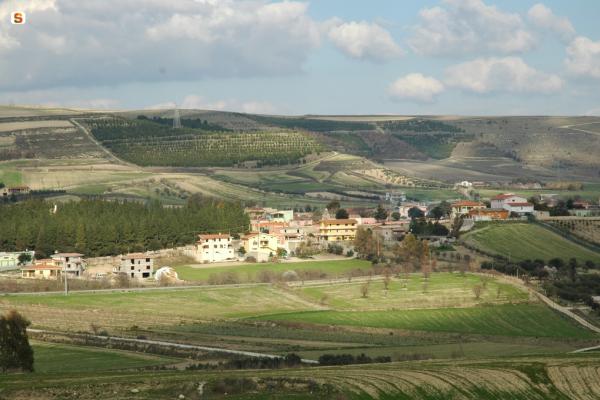
The fertile hills of Trexenta have been an attraction since prehistoric times. This is testified by circa 50 Nuragic settlements in the territory of Mandas alone, an agropastoral village of medieval origin that has always served as a crossroads for various peoples, as a land of passage between Campidano and Barbagie, as can be seen by a short stretch of Roman road in the centre of the town. Among the many remnants, the Nuraghe su Angiu, also known as Bangiu, forming the greatest legacy left by the Nuragic civilisation, bearing traces of prehistoric and historical overlaps in two areas, one Nuragic and inhabited in historical times, the other Punic, then Roman and High Medieval.
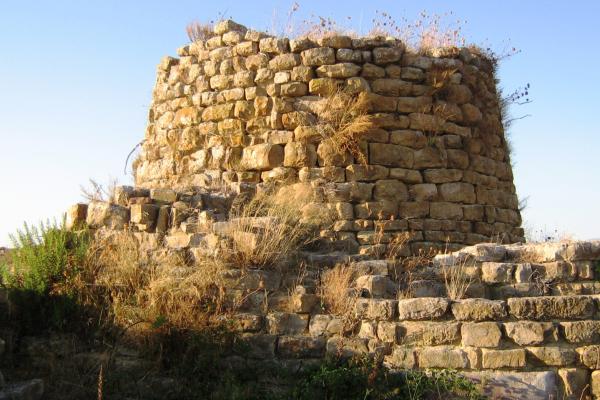
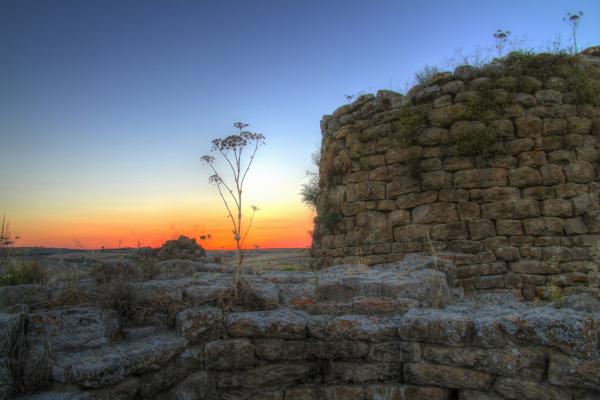
The archaeological complex extends across approximately three hectares, dominated by an imposing quadrilobed Nuraghe covered with a tholos (false dome) with bulwark. The first “anthropisation” of the edifice was undertaken by the Nuragic peoples between the final Bronze Age and the Iron Age (12th-8th century BC), presenting a particular cultural multi-layering from the 9th century BC.
The fertile hills of Trexenta have been an attraction since prehistoric times. This is testified by circa 50 Nuragic settlements in the territory of Mandas alone, an agropastoral village of medieval origin that has always served as a crossroads for various peoples, as a land of passage between Campidano and Barbagie, as can be seen by a short stretch of Roman road in the centre of the town. Among the many remnants, the Nuraghe su Angiu, also known as Bangiu, forming the greatest legacy left by the Nuragic civilisation, bearing traces of prehistoric and historical overlaps in two areas, one Nuragic and inhabited in historical times, the other Punic, then Roman and High Medieval.
The archaeological complex extends across approximately three hectares, dominated by an imposing quadrilobed Nuraghe covered with a tholos (false dome) with bulwark. The first “anthropisation” of the edifice was undertaken by the Nuragic peoples between the final Bronze Age and the Iron Age (12th-8th century BC), presenting a particular cultural multi-layering from the 9th century BC.
The excavations have brought to light ‘foreign’ materials, due to contact with the Phoenicians on the coast, focusing the attention of archaeologists on the relationship between local populations and people from the eastern Mediterranean, with whom they had close and profitable trade relations. A subsequent frequentation came during the Punic age, continuing without any break to the Roman and late Antique era. The wall structures identified in the northern part of Su Angiu can be traced back to this period. To the south of the Nuragic monument, rather, is a rectangle 15 metres in length and ten metres wide that is characterised by a well with shaft lined with stones of various shapes and sizes. The spring was perhaps originally Nuragic, later obliterated by Roman structures. Excavations have brought to light mostly material Punic (painted ceramics), but also Nuragic. The most important finding is a bronze ship, exhibited at the National Archaeological Museum in Cagliari.
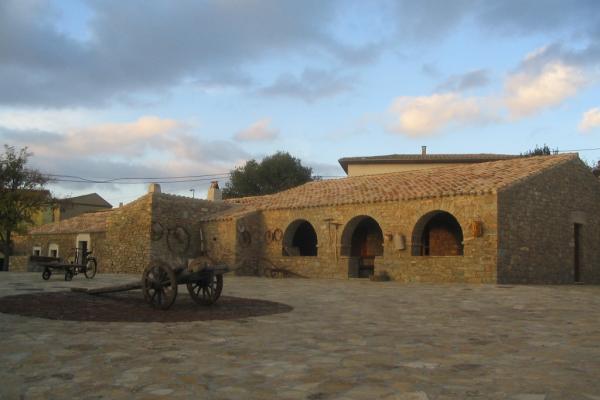
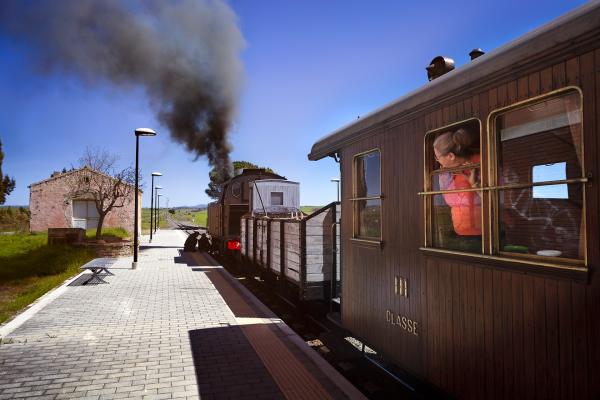
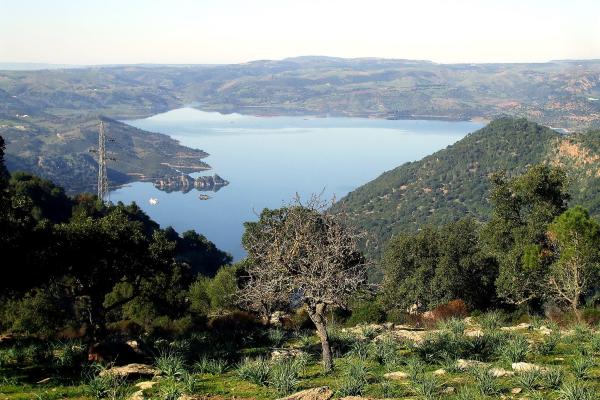
Another important Nuragic site in Mandas is the Tomb of Giants of s'Arruina de su Procu. To explore the cultural traditions of the town, there is the ethnographic museum is Lollas 'e is Aiaiusu (‘the grandparents’ rooms’), set up in an 18th-century residence. Rising up nearby is the majestic 19th-century town hall and the compendium consisting of a little church (13th century) and the Convent of Sant’Antonio Abate. In the outskirts, rather, is the main place of worship: the parish church of San Giacomo, built between 1585 and 1605 in Gothic-Catalan style. The Trenino Verde (Green Train) is an evocative way to discover the territory - it follows panoramic paths, through the hills, gorges, rocky walls and passing by Lago Mulargia.