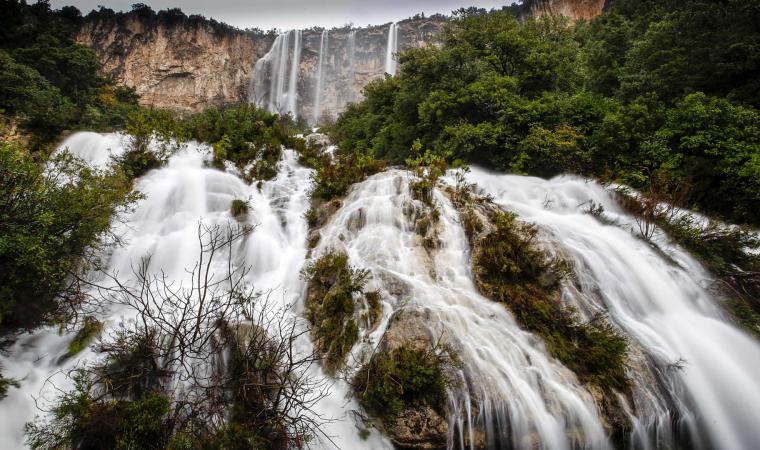
Unleash your imagination, in search of Plato's Island
Beyond the Pillars of Hercules there was a golden island sacred to Poseidon, god of the sea. At the height of its greatness it was lost, struck down by a catastrophic natural disaster. Myth says that it was the cradle of a powerful and original civilisation that had evolved over thousands of years and guarded the knowledge and know-how handed down from generation to generation by its inhabitants, a people of warriors, navigators and daring architects who built magnificent stone towers that had never been seen elsewhere. In the ancient world, the island was considered an earthly paradise: coastline, sea, idyllic mountains and a beautiful landscape dotted with curious black, white and red stones. A land rich in silver veins and spring waters, which rose to the surface in fonts revered as sacred and formed pools of warm water and steam, a panacea of health and beauty. Life lasted longer here, thanks also to bountiful nature and a mild climate, mild summers and winters with plenty of sunshine allowing more crops to be harvested throughout the year.
A game for dreamers, following the clues left by Plato to find traces in Sardinia that lead to the island of Atlas.
Island of sacred water
Water is the transcendental dimension of Nature; when man dips his toe into the sacred well, he feels its energy and becomes the point of encounter and balance with the cosmic forces of the sky and the primordial power of Mother Earth; it is there that the divine resides.

The most representative, best preserved, evocative, and most mysterious nuragic well temple is located near a village in central-western Sardinia
Island of towers
There are eight thousand of them and many more yet to be unearthed, megalithic boulders joined together with no mortar, seemingly defying the laws of physics. One can easily imagine the amazement of the ancient navigators who sailed the ancient Mediterranean, only seeing the nuraghes here.

In the Sarcidano area, the central-southern part of Sardinia, there is one of the greatest protohistoric monuments in the whole of Western Europe,…
Island of warm waters
From the dawn of time, bathing in the warm spring waters of Mother Earth was a ritual of purification and not just a health and beauty practice. You will come across natural pools of hot water and steam unexpectedly among untouched natural environments.

When they found 'special' water sources in their colonies, the Romans built monumental baths, as they did in what is now Fordongianus, a small town…
Island of black, red, white stones
The island's great stone heart comes from a small fragment of Tyrrhenide, the great shipwrecked continent, with porphyry and granite from the Palaeozoic, limestone, sandstone and marl from the Mesozoic, basalt and trachyte from the Tertiary, alluvial sands and dunes from the Quaternary.
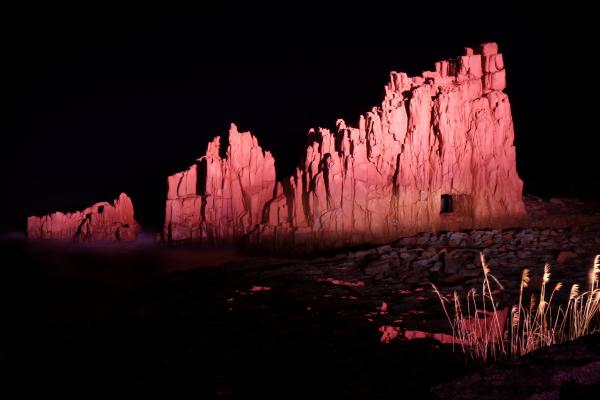
In Ogliastra, in the central eastern coast of Sardinia, stands out a splendid natural cathedral of red porphyry that surges from the emerald green…
Island of fresh waters
The waters do not fall by chance from the sky and then stagnate on the ground, these are divine waters created by Mother Earth. Groundwater sources were the centre of man's life but were closely connected with the symbolic and divine side of Nature.
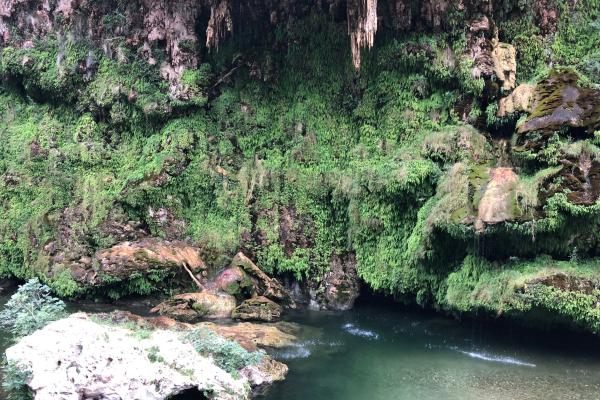
On the border between the Barbagie di Seulo and Belvì, near the centre of Sardinia, the dripping of spring water on rocky walls covered with greenery…
Island of silver veins
An ancient land that hides great riches, the Gennargentu, so imperious to the eye, hides in its rugged terrain "the paths to copper and silver". Its treasures of minerals and metals will be sought after in every era.
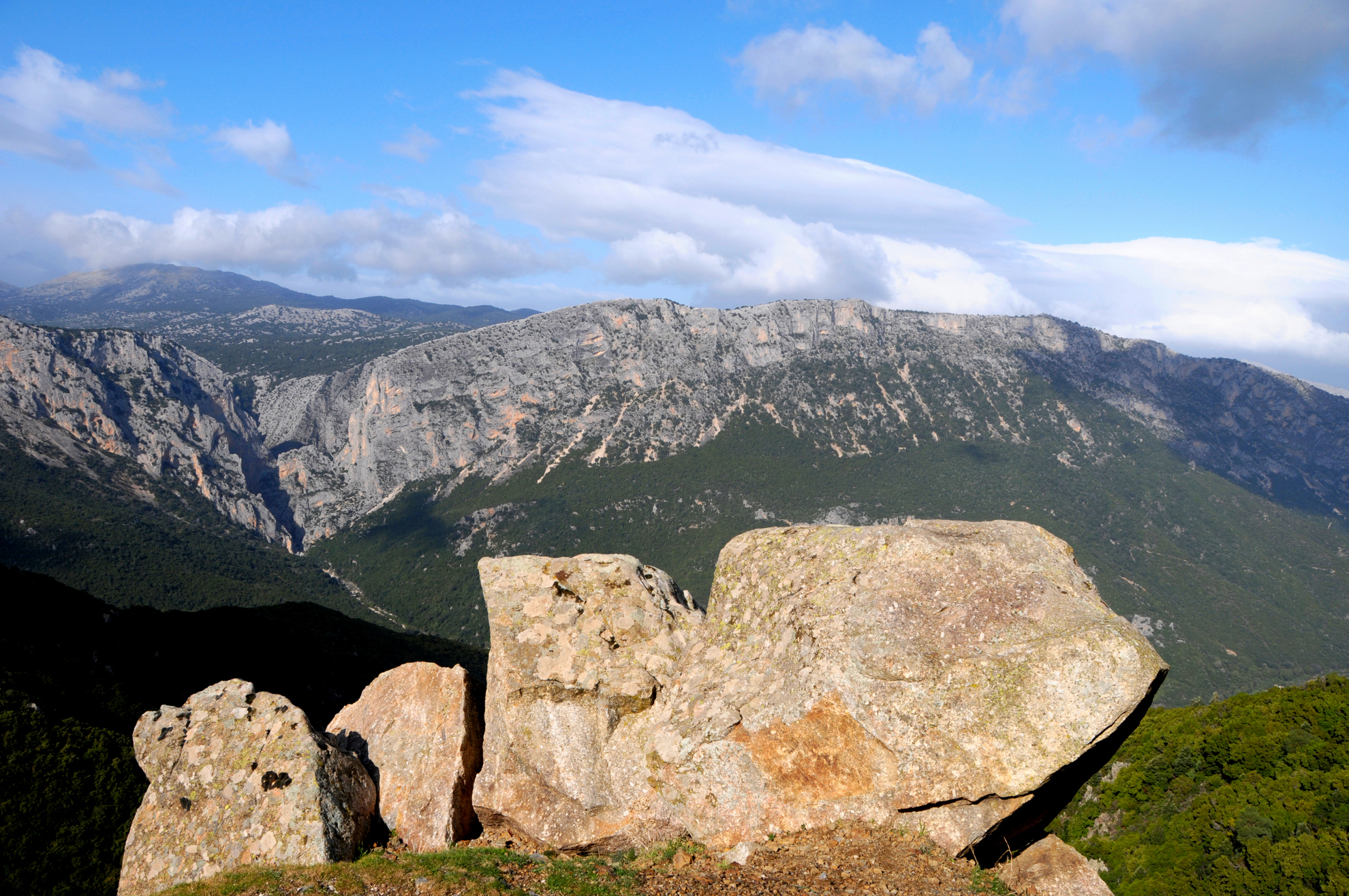
Sardinia’s highest peak rises at the centre of the Island, surrounded by pure air, pristine arid landscapes, dense forests, starry nights, the…
Theme
You might also like
Other articles that may interest you