Painting itineraries in Cagliari
A ‘treasure hunt’ through famous places of culture in the Sardinian capital


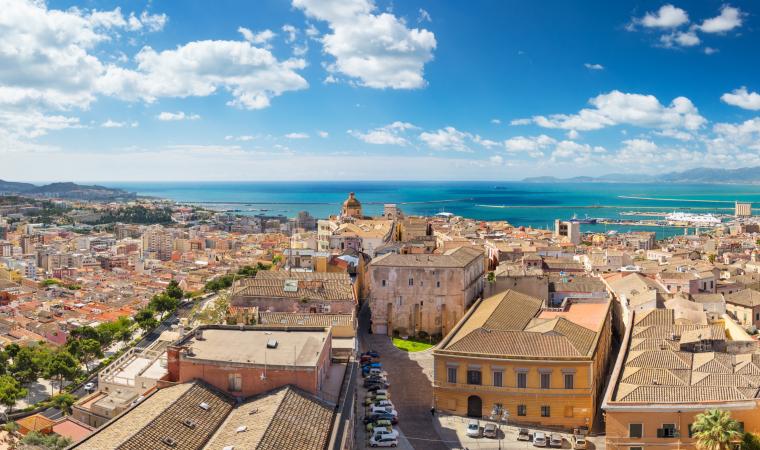
From the medieval altarpieces of Spanish origin in the Picture Gallery to the contemporary paintings kept in the Municipal Art Gallery, as well as Renaissance and Savoy canvases: Cagliari offers the possibility of a fascinating tour in search of works of great historical-artistic value. Often in places that are, in themselves, worthy of a visit, such as the Cathedral or Palazzo Bacaredda, better known as the Palazzo Civico (Town Hall). The short, pleasant walk links two historic districts, Castello and Marina, adding other ideas and points of interest to the itinerary.
Itinerary: about 2 km
Walking travel time: 30 min
The journey begins in the greenery, in the public gardens. Artistic creations already start to appear around the tree-lined avenue that leads to the former royal armoury, inside which the Gallery is located. Between the Ingrao Collection and the section dedicated to Sardinian artists, you can ‘lose yourself’ in the cultural ferment of the 20th century, admiring works by masters such as Boccioni, Morandi, Carrà and Maccari; the visit is an opportunity to delve deeper into the art of Ciusa, Sciola, Nivola and Maria Lai.

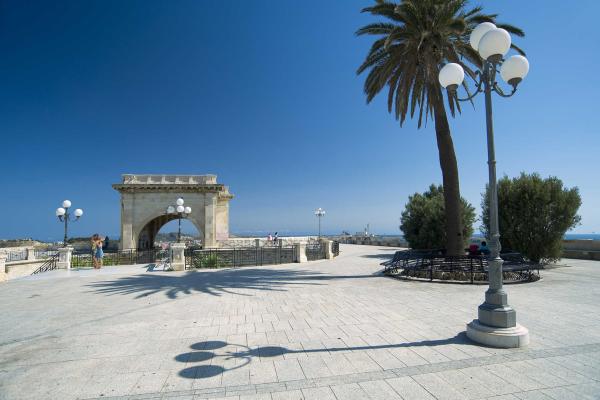
After crossing the gardens again and up the panoramic hill of Via Badas, you enter the Castello district through the San Pancrazio Gate. To the right, lies the Citadel of Museums, where - along with the Archaeological Museum, the Museum of Siamese Art, the San Pancrazio Exhibition Space and the Anatomical Wax Museum - there is the Picture Gallery. The collection is divided into three exhibition floors and ranges from the 15th to the 20th century. The retables stand out, especially those made by Pietro Cavaro and Antioco Mainas.

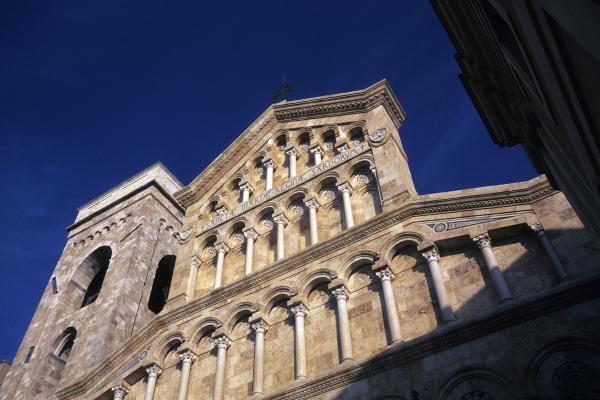
A lovely walk in the heart of Castello, observing the San Pancrazio Tower and the Royal Palace, will take you to the cathedral, dedicated to Saint Maria and Saint Cecilia, in just a few minutes. In addition to the beautiful paintings kept in the chapels of the naves and in the transepts, the treasure of the Sacristy of the ‘Beneficiati’ (Beneficiaries) is not to be missed. Among the most valuable works, there is the retable of the same name by the Neapolitan school and the Triptych of Clement VII that comes from Rome and was created by a Flemish workshop.
You will cross the district from east to west, cutting across the ‘iconic’ streets of Via Canelles, Via dei Genovesi and Via Lamarmora and admiring the views there, arriving, after a 300-metre walk, in front of the University Building. In the same complex, a few steps further south, there is the entrance to the building of the former Tridentine Seminary. Inside it, is the Luigi Piloni collection: it contains paintings created between the 16th and the 20th century, tempera paintings and panels depicting Sardinian costumes.

Moving on... less than a kilometre, practically all downhill. There are three options for heading towards the port: via the Santa Chiara steps, Piazza Yenne and Largo Carlo Felice; otherwise you can walk along the Largo passing through Porta dei Leoni, just below the terrace of the Bastion of Saint Remy; then, after passing through the Gate, you can ‘dive’ into the picturesque Marina district. Just a few steps away, you will reach the majestic Palazzo Civico (Town Hall), where you can admire Flemish tapestries and canvases by Figari and Marghinotti.