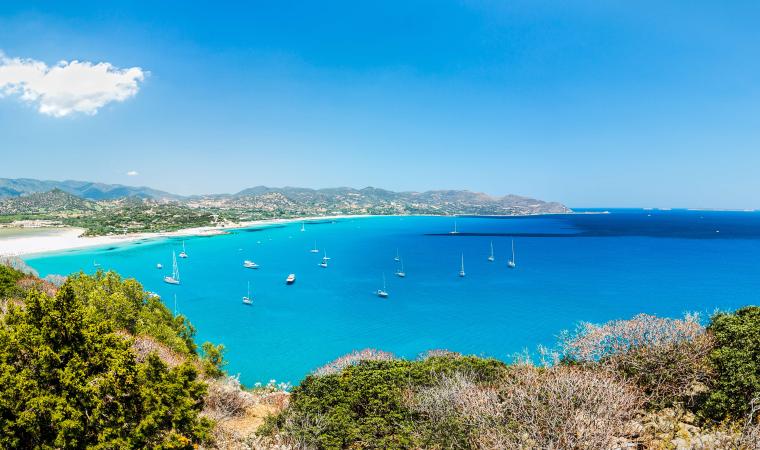
Ogliastra on foot, from tower to tower
Real natural luxury can be conquered step by step, without going too far, in extraordinary places


Moving along the coast of Ogliastra, over 50 kilometres divided into four legs and marked by clear landmarks, the coastal towers that stand out on the cliffs, once defensive bastions and today panoramic observation points. The itinerary takes you from the Aragonese tower of Sarrala in Marina di Tertenia, along the coasts of Gairo, Cardedu and Barì Sardo, as far as Arbatax and, lastly, at Santa Maria Navarrese, the seaside village of Baunei. You can stop for a rest in these seaside locations and taste the delicacies that arrive ‘fresh’ from the sea and the land and are part of the ‘centenarians’ diet’. After the first leg in the wild greenery of Monte Ferru you can follow the outline of the coast. While walking along cliffs and enchanting beaches, you’ll come across prehistoric legacies and feel thrilled during the first few kilometres of the most popular trekking trail in Europe that looks out over Gulf of Orosei. If the sea of Ogliastra enchants you and the Supramonte leaves you spellbound, you’ll be coming back to this area.
Itinerary: 60 Km
Journey time: about 15 hours, spread over 4 days
You’ll set off from the Aragonese tower that watches over twenty kilometres of sea from the islet of Quirra to Capo Sferracavallo. From here, walking north, after going past the cape, the view opens up onto the marinas of Gairo and Cardedu. This first stretch of Ogliastra is deserted and wild, just like in the past, when it was targeted by pirates. Downstream of the Monte Nieddu Forest, you’ll find natural pools and waterfalls, a cool oasis to enjoy before following the riverbed that leads to the end of the first 14-km leg.

The path from Coccorrocci runs through Cala ‘e Luas and su Sirboni. Stopping off at these semi-deserted coves of red porphyry ‘besieged’ by the green Mediterranean scrub, is a must. After the red rocks, there’s a very long stretch of sand, almost ten kilometres (of the total 15 km of this leg), from Perd’e Pera to Planargia, passing through Museddu, Marina di Cardedu and Foddini. In the distance, you can see the destination of the second leg: the majestic Spanish tower of Barì. From spring to late autumn, you’ll find good tables and places to stay overnight in the surroundings.

The next day begins along a path overlooking the volcanic plateau of Teccu, made of eruptive rocks that form natural pools in the sea. Beyond the plateau are the splendid beach of Cea and the very long Lido di Orrì. This coastal stretch is closed by a promontory where the first of the three towers of Tortolì, that of San Gemiliano, stands out. From here, the view stretches as far as the lighthouse of Bellavista, once a watchtower. At this point, the third leg, also 15 kilometres long, is almost over and ends in the heart of Arbatax, where the beautiful San Miguel tower stands out.

The people have remained deeply rooted to this area, which is evident in the jealous preservation of the language, and have combined their roots with a warm welcome for guests. In fact, in the shade of the thousand-year-old olive trees in Santa Maria Navarrese, the point of arrival of this leg, the locals share traditions and healthy habits with visitors, especially at the table. You’ll walk about ten kilometres, mostly on beaches, to get here from Arbatax, passing through Girasole and Lotzorai, and you’ll be captivated at the sight of the islet of Ogliastra, the scenic symbol of the village.

From Santa Maria Navarrese, on the same day, you can ‘try’ a little of the extremely beautiful Selvaggio Blu (Wild Blue) trekking trail. In fact, you’ll find its character, colours and scents in the easy six-kilometre coastal route from Santa Maria Navarrese to Pedra Longa, which, almost like a coastal tower, looks silently out at the sea. Along the way, there are tiny coves that can be reached via descents just a few metres from the path. A swim before carrying on and completing the itinerary.