

Aggius
In the heart of the Gallura is a characteristic village that will strike you for the great care they take of their granite houses, considered among the most beautiful in all the region. One of the main activities of those who live in Aggius is the extraction and processing of granite, but the town is also known for its beautiful carpets and, more generally speaking, for its fine textiles. The Touring Club Italiano has awarded the town with a Bandiera Arancione (Orange Flag) in recognition of the characteristics of the historical centre, the beauty of its setting and the efficiency of its services for visitors.
Among the attractions is the town’s choir, famous for its remarkable sound and nicknamed “Choir of the Galluran Roosters” by the famous poet Gabriele D’Annunzio. Another highlight is the atmosphere created during Holy Week, when the small town becomes something of a Jerusalem and the streets fill with the faithful as members of the local lay brotherhoods clad in traditional garments walk in solemn procession. Aggius is one of the few towns in Gallura to have maintained this centuries-old tradition and the entire week from Palm Sunday through Easter celebrations are held in spectacular Spanish tradition.
Do not miss a visit to the museo etnografico named after Oliva Carta Cannas, home to original items and machinery that tell of the history, culture and traditions of the Gallura region. Another unique museum focuses attention on the phenomenon of Bandits and is housed at the palazzo of the ‘vecchia Pretura.’
The vast area surrounding Aggius is ideal for hiking among the characteristic stazzi (characteristic rural settlements) and archaeological sites. The Izzana nuraghe, Gallura’s largest, is especially interesting.
Portisco
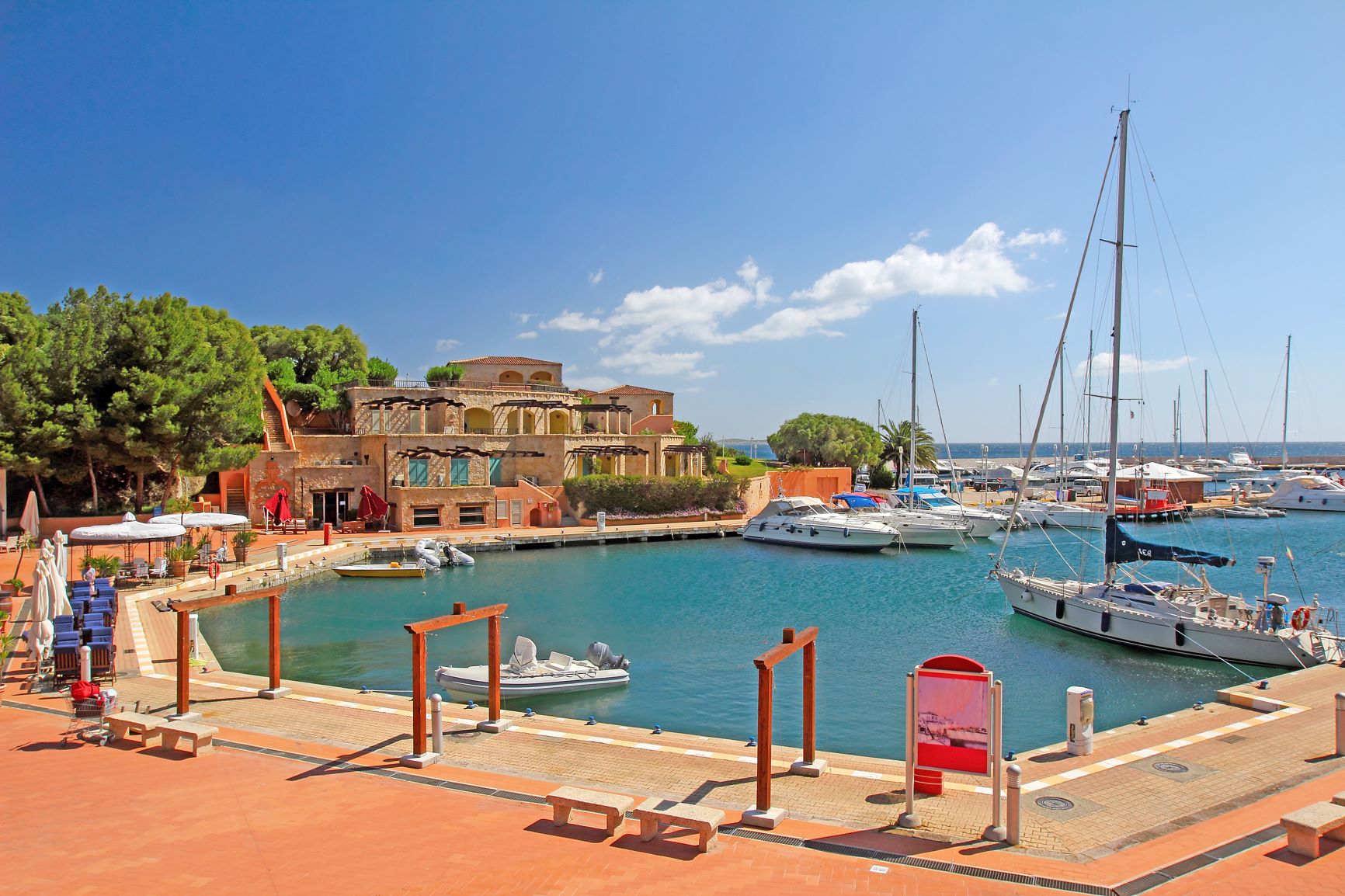
Embraced by a spellbinding landscape, ‘strategically’ positioned for exploring one of the most captivating coastal stretches of the Mediterranean and well connected to the port and airport of Olbia, Portisco is an ideal destination just outside the Costa Smeralda, suitable for all types of tourists and equipped with every comfort. Villas and residences, hotels and beaches in the renowned resort occupy the western part of the Gulf of Cugnana, along with a picturesque and well-equipped tourist port, the Marina di Portisco, continuously prized with the Blue Flag award as a tourist port since 2016, thanks to its clear waters, environmental protection and quality of services. The opposite end of Portisco is represented by a strip of semi-outcropping rock that ends near the granite islet of the same name, covered in Mediterranean greenery and embellished with wild, deserted coves.
Between the port and the Island, there is a strip of fine-grained white sand, with shallow waters and a few rocks. You will be surprised by the two colours of the sea - turquoise near the shoreline and cobalt blue offshore. The beach is perfect for families, thanks to the gently sloping seabed and the numerous services present, parking, refreshment areas, beach equipment and boat rentals. That’s not all... it is also an attraction for diving and snorkelling enthusiasts, especially around the rocky coves.
The scenery is magnificent: on your left, there’s the cliff and the islet of Portisco, while on your right, beyond the marina, is the Gulf of Cugnana and, in front of it, at the opposite end of the bay, Portisco's ‘neighbour’, namely Porto Rotondo. From the port, you can take a boat to discover the Costa Smeralda beaches, the islands of Mortorio and Soffi, with their little coves and natural pools, and move towards the Arcipelago della Maddalena Park, 60 islands and islets with magical and protected beaches.
If, however, you are moving by land along the ‘panoramic’ provincial road SP 94, you will cross the southern border of the Costa Smeralda and you can admire its jewels: starting from Rena Bianca, named after the white colour of its sand, where the cliffs frame the emerald green sea, while the shoreline is tinged with pink due to the small grains of quartzite. Continuing north, you will come across Razza di Giunco, where the beach dotted with pink granite rocks alternates with fjords, islets and promontories, and Petra Ruja, ‘coloured’ by distinctive red rocks. The pink water’s edge returns at Liscia Ruja, the largest Costa Smeralda beach, surrounded by Mediterranean scrub, followed by the bay of Cala di Volpe, one of the best-known destinations of the ‘Costa’. Its landscape is fairytale-like: the deep blue sea, with its granite rocky outcrops, opens up before myrtles and junipers.

Cala Ghjlgolu - della Tartaruga
This is where nature sculpts the granite rock. Cala Ghjlgolu (or Girgolu) is found in thelocality of Vaccilleddi, at the base of the Monte Petrosu promontory, in the territory of Loiri Porto San Paolo. Its turquoise sea and white sand make it shine and it is known above all for the rock of La Tartaruga - from which it gets its ‘second’ name - an attraction for visitors, especially younger visitors. It is one of the most photographed rocks not only in Gallura but in the whole of Sardinia and is the result of thousands of years of erosion caused by the weather. Other rocks also make the cove stand out: these are called ‘tafonate’ and are eroded by the quartz crystals from the granite that, when crumbled, rotate wildly as an effect of the wind.
The beach is a wonderful source of continuous surprises: ochre-coloured sand mixed with smooth pebbles. The waters are shallow and the seabed is sandy, a perfect place for taking a nice, safe, peaceful dip and it is also ideal for children. You will find all the services you need: parking, facilities for the disabled, campsite, place for dining/refreshments, beach umbrella, sunbed, canoe, pedalo and dinghy rentals. Behind Cala Ghjlgolu, the landscape is enriched by a small pond, which is the habitat of several bird species.
Along the nearby coast, you will find a series of charming little coves, connected to each other and surrounded by Mediterranean scrub and light granite rock. Little trails make it possible to move from one to the other, in the setting of themarine area of Capo Coda Cavallo and the island of Tavolara, rising up like a mountain over the brightly-coloured sea.
Nearby, a visit to the beaches of San Teodoro is a must: the endless, narrow strip of golden sandof the Cinta, the white shoreline and the tropical waters of Cala Brandinchi and the nearbyLu Impostu or the splendid S'Isuledda and the beach ofAldia Bianca.
Porto Istana
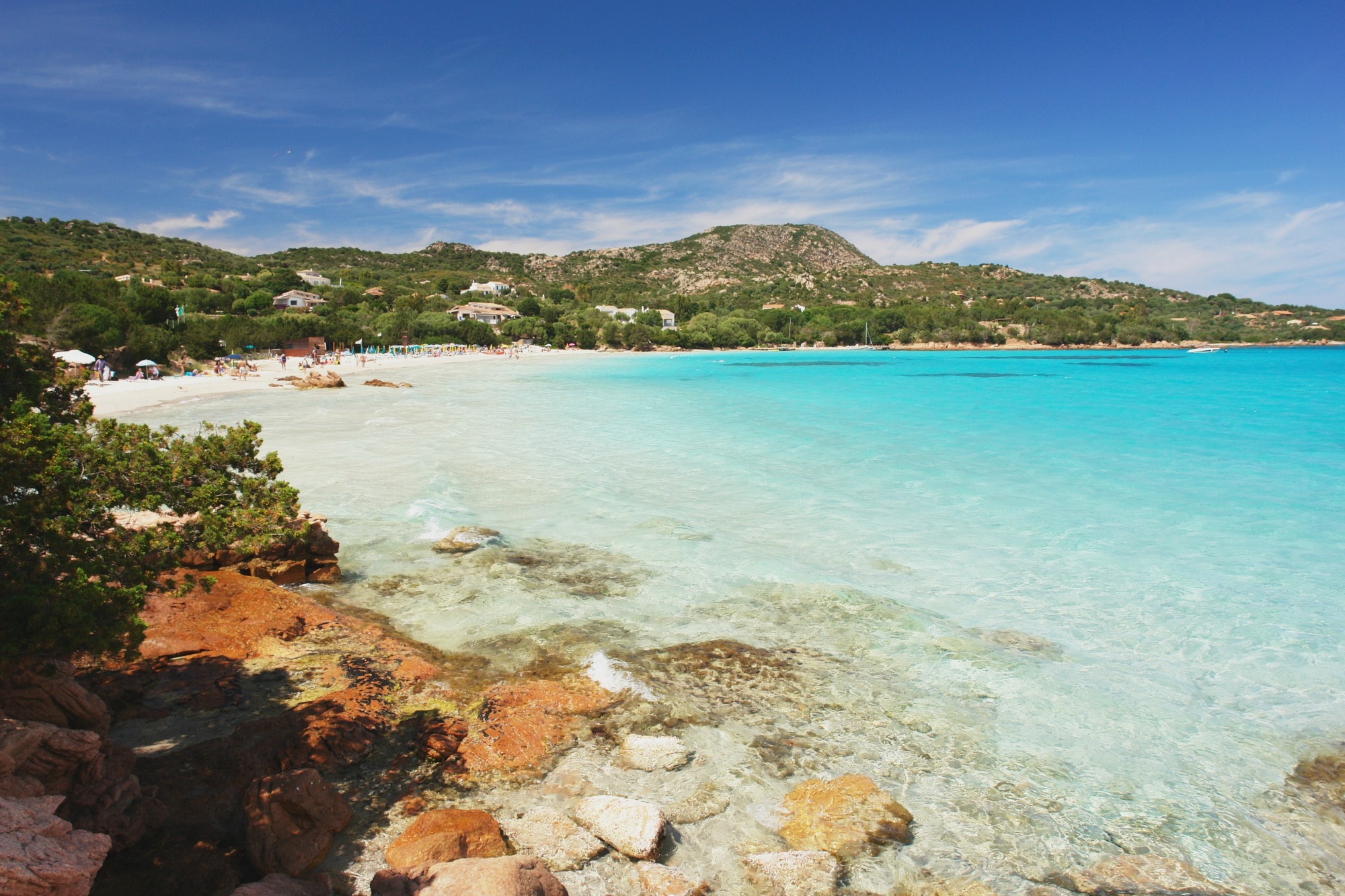
Turquoise waves glide over the surface of the sea, creating an effect of light and colours that is remindful of crystals. The white sand covers the beach, creating a glaring contrast with the water hues. The bay of Porto Istana is located at the feet of Capo Cesaro, a granitic promontory in the Murta Maria neighbourhood inside the gulf (and the territory) of Olbia, twenty minutes by car.
The bay is made up of four beaches, separated from each other by small rocky strips. It is surrounded by pink granites and outlined with green Mediterranean bushes: cistus, giant strawberry trees, ericas, evergreen oaks and olive trees. All four little coves, identified by ordinal numbers starting from the north, are characterised by a sea bottom of very fine white sand that gradually dives into the emerald colours of the sea, which makes them particularly suitable for children.
From the beach, enjoy the view provided by the vertical majestic figure of Tavolara, sunbathe while you relax or swim in the paradisiac waters of the protected marine area. The coast is accessible to disabled people, connected to the city through public transportation, has plenty of parking space and rental agencies for beach equipment. Around the beach there are hotels, tourist resorts, restaurants and bars. The coves, beaten by the wind, are a favourite destination of sailors and windsurfers. The seabed is rich with marine flora and fauna, making it an excellent place for scuba divers and snorkelers. In addition, the shore near Olbia is a diving paradise, with various diving points in the promontory of Capo Figari (territory of the Aranci Gulf) and in the marine area: Tedja Liscia, la secca del Papa (shallows), the Molara wreck, the Molarotto rock.
During your Olbia vacation, enjoy other seaside paradises: after Porto Istana, going towards San Teodoro, you will find the yellow-ochre sand of Lido del Sole and Li Cuncheddi. The “town” beach is La Playa di Pittulongu, a half-moon of fine white sand. Nearby are the Spiaggia dello Squalo, the Pellicano, similar to the Playa, but smaller, and Mare e Rocce. Further north there is Bados, with soft grey-ochre sand. The coast of Olbia also includes other long segments: in the direction of the Emerald Coast, there are “pearls” of white sand and crystalline sea in Marinella, Porto Rotondo, Portisco and Marina di Cugnana, among which the Spiaggia Bianca.

Porto Liscia
Porto Liscia is found in the place with the same name, between the communes of Santa Teresa Gallura and Palau. in fact , the river Liscia borders both their territories. The coarse-grained granitic golden shore has a sandy shallow bottom. Surrounded by longitudinal dunes and by extremely dense vegetation abounding with juniper and mastic trees, the narrow beach stretches out for a long way, starting from the Coluccia peninsula and extending for about 8 kilometres as far as Isuledda, over a surface area of almost 87 hectares. The beach, formed by the inundation of the river Liscia, is divided into 2 parts by the mouth of the river and by the Sciumara lagoon, which offer a very interesting natural environment with tamerisks and reeds hosting herring-gulls, cormorants, herons and beautiful pink flamingos. In virtue of these natural peculiarities, it has been the Coluccia Permanent Protected Fauna Oasis since 1994. From the beach you can enjoy the view of La Maddalena, the Island of Lavezzi and the cliffs of Bonifacio.
Spiaggia Rosa
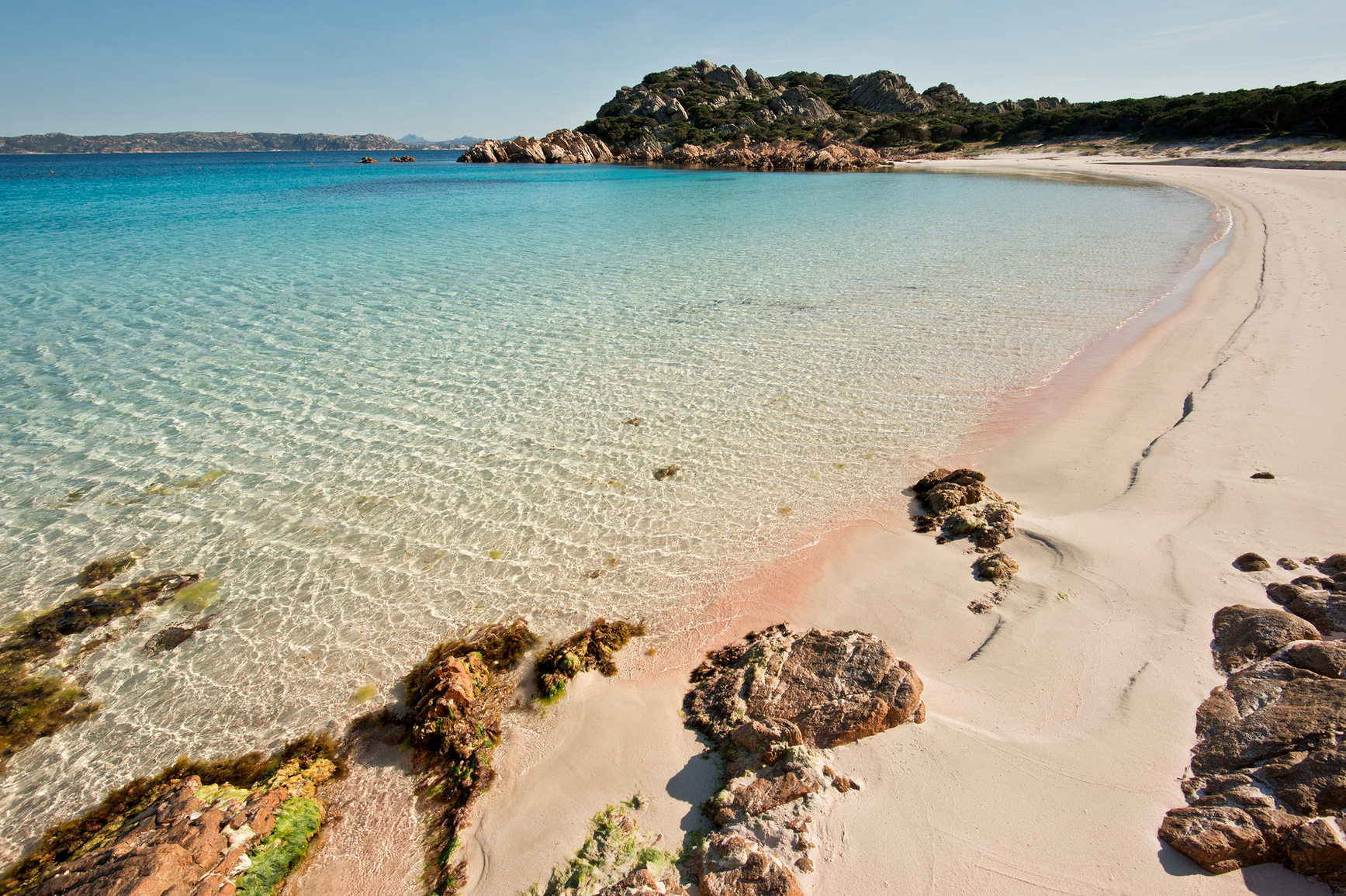
You can admire it as an authentic masterpiece of nature from the nearby beaches spiaggia del Cavaliere and Cala di Roto, accompanied by the guides of the Maddalena Archipelago National Park. Its view offers unforgettable emotions. The Pink beach on Budelli Island, one of the world’s most beautiful beaches, owes its name to the colour of its sand, rich with tiny fragments of coral, granite and shells. Its spectacular colour is derived from a pink microorganism that inhabits the posidonia meadows and lives inside the shells. When it does, the shells are washed ashore and ground by water and wind.
In the 20th century, anchoring boats and the irregular agitation of the sea slowed down posidonia growth and modified the composition of the sand. In 1998, new regulations were introduced to protect the beach, which was then closed to disembarking (to avoid looting as well), bathing and boat anchoring, allowing the beach to recover its original colour. You will find yourself facing clear waters that lap against reddish foreshore and, to your back, the Mediterranean vegetation displays the colours and scents of a paradise on earth, made famous by the genius of Michelangelo Antonioni, who shot part of his movie “Red Desert” here in 1964.
Budelli, an oasis of wild nature, has been a private property since before the national park was created, to which it was assigned in May 2016, after an unsuccessful purchase attempt by a tycoon from New Zealand. It is located slightly to the south of Razzoli and Santa Maria, the two islands of the archipelago closest to the Bocche di Bonifacio. It covers 12 kilometres of coast and an uncontaminated territory of 25 hectares, inhabited by a single person: its guardian. From Monte Budello (87 metres high) the view is decidedly breath-taking: granitic rocks that hide little coves of fine sand and deep blue sea. The entire archipelago offers dreamlike places to visit: Cala Coticcio at Caprera, forts Santo Stefano, Cala Corsara at Spargi, the fine golden sand beaches of the Maddalena, to mention a few.
The area is a sanctuary for cetaceous, and is the home of dolphins, sperm whales and other whales, and are diving paradises. In particular, the Washington shallows are located between Budelli and Spargi, made up of granite blocks coloured by red soft corals.
Stagnali
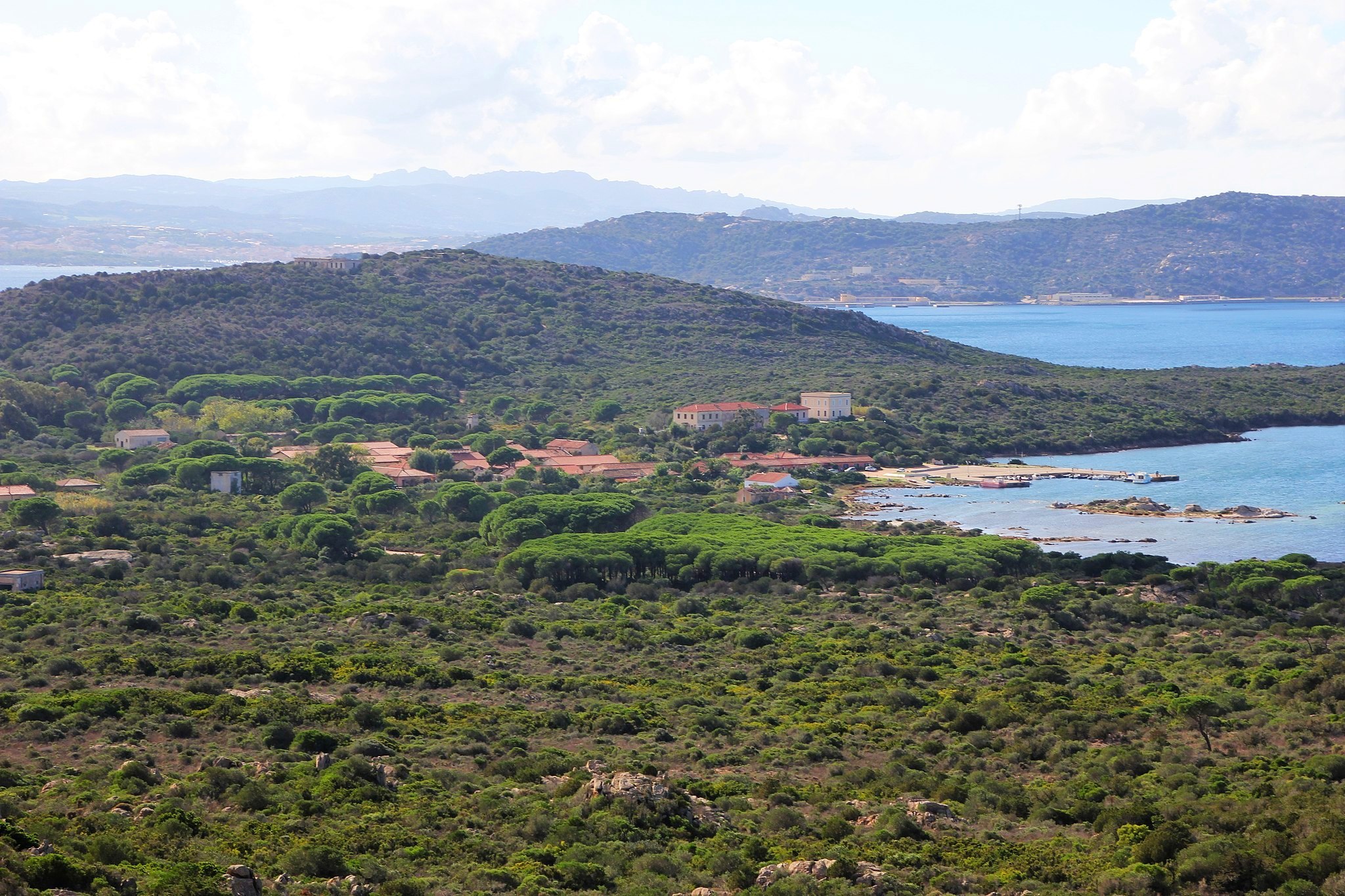
Once a strategic military outpost, today it is an environmental centre and the symbol of the link between the past and the future, with views over the turquoise hues of the sea. The town of Stagnali looks out over the beach of the same name on the south-western side of Caprera, the second largest island of the Maddalena archipelago. Its origins date to the early 20th century, when the then Ministry of War built a garrison with barracks, storerooms, offices and stalls there. The complex, known as the ‘baraccamenti militari’, was home to the 3rd Company of the Bersaglieri Battalion. Its task was to defend the archipelago against enemy landings on the numerous beaches of the island. Stagnali is no longer a military outpost and now enjoys a new and varied existence: it is the island’s only in habited town and home to several structures belonging to the National Park of the Maddalena Archipelago, which includes an environmental education centre run by the park.
Stagnali is home to the Museum of the Sea and Maritime Traditions, the mineralogy-naturalistic museum and a dolphin research centre. The first one tells the story of the archipelago’s inhabitants and their relationship with the sea. At the mineralogy museum you’ll learn all about the rocks that make up the archipelago and the various types of sand that make up the beaches, as well as seeing a variety of fossils. There is even a section displaying meteorite fragments from some of the most famous impact locations in the world. The dolphin research centre monitors and works to safeguard the cetaceans that live in the surrounding waters, as well as organising excursions for visitors to see them first hand in their habitat.
In town, you can visit the little church dedicated to the Madonna della Pace. Once a military warehouse, a chapel was put in there in the mid-20th century. Abandoned for many years, the building was completely renovated and the church was inaugurated in 1998. Inside you’ll see frescoes and an altar made of granite ashlars. The town has a little harbour with a masonry pier built at the time the military was establishing itself there, but it is now used by both boaters and fishermen. A small beach lies next to the landing place, with golden medium-large grained sand and clear turquoise water dotted with rocky outcrops.
The village is a great starting point to go explore the attractions Caprera has to offer. As you head south-east, you will cross over an isthmus, graced on both sides by the Due Mari beaches. Further east is Relitto Beach where the wreck of a motorised sailboat lies on the beach facing a sea blessed with emerald reflections. Caprera is famous above all as the home of the Hero of the Two Worlds, Giuseppe Garibaldi. You can retrace his fascinating history and legendary exploits visiting the Garibaldi Compendium, and then proceed to enjoy the beaches on the northern side: Cala Serena, Cala Napoletana and the so-called Tahiti of Sardinia, Cala Coticcio.
Telti
It is immersed in an evocative landscape between wind-shaped granite masses and imposing forests of holm and cork oaks, wild olives and Mediterranean shrubs. Telti is a typical hill town of Gallura, populated by over 2000 inhabitants – in part scattered in the surrounding countryside – who make their living mainly through farming and shepherding. Local companies specializing in fresh pasta and granite, iron and wood products are currently experiencing a strong growth. Telti has been an autonomous municipality since 1963, when it broke off from Tempio Pausania. Its name derives from Tertium, which was a Roman military station on the fork in the Olbia-Gemellae road. In the Medieval Period, it became Villa Torcis, a village involved in a long war in the 14th century between the Crown of Aragon and the Giudicato of Arborea. The modern town is of recent construction. Starting in the 18th century, with encouragements from the Pope, the various nearby stazzi (typical rural settlements) congregated around the two churches (at the time in the countryside): the Church of Sant’Anatolia (18th century) and the Church of Santa Vittoria, completed in 1899 in 18th century style, today located in the heart of the town. Both once served as religious centres for residents of nearby towns, who reunited there for worship. In the small historical centre, visitors can admire the unusual-coloured granite used in construction and various murals. Not far from the town centre, stands the Cultural and Natural Museum of Sardinia, which records the local community life, traditional domestic spaces, animals, plants and minerals. In the direction of Calangianus, stands the 17th century country Church of San Bachisio, who is honoured in May with a community lunch. The local rituals of the Holy Week and processions in traditional dress for the feast days of saints Anatolia and Vittoria are particularly fascinating.
The area is rich in springs and streams, which has resulted in particularly thick and thriving vegetation. The highest peak, Mount Pinu, tops off at 750 metres and is covered by a vast maritime pine forest. The discovery of burials in naturally produced cavities in granitic formations confirm human presence in the area since the Neolithic (5000-2700 BC). Some Domus de Janas, small artificial chambers excavated in the rock, have been dated to the following Copper Age. The area was densely populated in the Bronze Age: Nuragic, Ilienses and Balares cultures have built a series of nuraghes such as Putzolu, an elliptical nuraghe with three chambers and a corridor located in a town of the same name, and La Prexona di Siana, an originally three-lobed nuraghe with a keep linked to three more towers arranged in a triangle, located in Aratena. Various Punic coins confirm the probable existence of the village between the 9th and 3rd century BC.

Cala Spalmatore
The deep inlet of Cala Spalmatore, in the northeastern part of the island of La Maddalena, is well-known, and has been for centuries, to the fishermen who landed in the bay to ‘coat’ their boats with pitch and it is one of the major attractions of an archipelago and national park. A long pier that stands out in the centre of the cove is a reminder of the fishermen’s work. Today, protected from the elements, it is still a privileged and safe mooring place for numerous boats of various sizes.
At the end of the long fjord, reflecting the various colours of the water, there is a small beach - 70 metres long and 25 metres wide - one of the busiest on the island and equipped with all bathing and refreshment services. The sand is grainy with a pinkish tinge and yellow and black streaks, the result of mica and quartz. The sandy seabed slopes gently away from the shore and is suitable for both families and snorkellers. Behind the beach, you will find a small pond, the habitat of a large variety of animal species. The surrounding area is dominated by Mediterranean scrub.
The landscape is embellished with pink granite rocks and the Guardia del Turco lookout post. From the high ground, you can admire the entire surface of La Maddalena on one side and, on the opposite side, Caprera, which you can get to from an artificial isthmus a short distance from Spalmatore. From here, you can also set off to discover the entire Maddalena coastline, made up of cliffs, inlets and little coves. Following the road that runs alongside the island, you’ll find dunes of fine white sand on the beaches of Bassa Trinita, Cala Lunga and Monti d’a Rena. On the west coast, you can admire the small granitic bays of Cala Francese and, to the south, the brilliant colours of Punta Tegge and the enchanting Nido d’Aquila. Continuing along the Padule seafront to the east, you will enter the residential area of La Maddalena from the small port of Cala Gavetta: don’t miss a chance to visit the historic centre and the city museums.
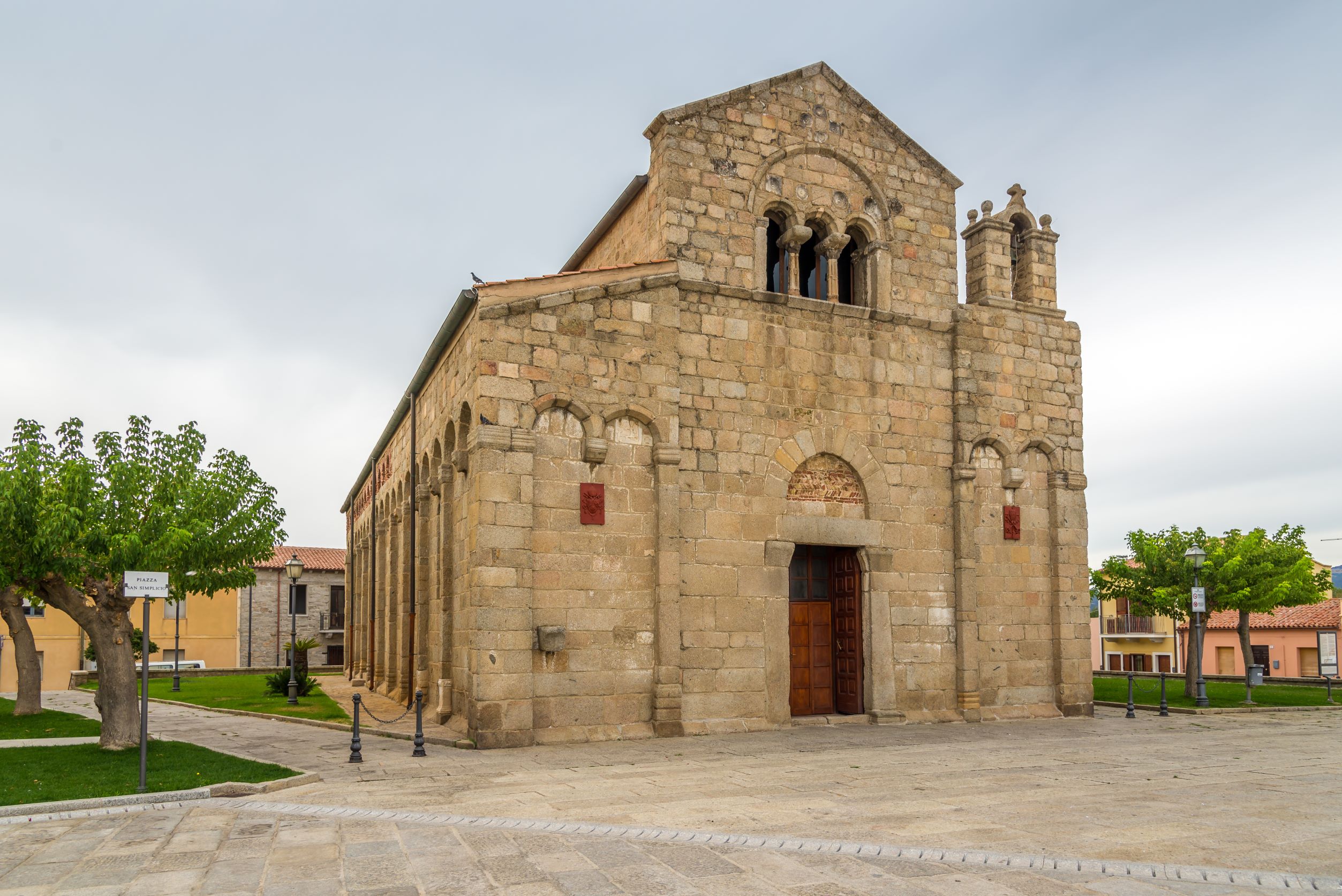
San Simplicio - Olbia
In Gallura, examples of Romanesque architecture are rare, yet the best-preserved basilica in all of Sardinia is found in Olbia. San Simplicio, built at the behest of the judges of Gallura, between the end of the 11th and the beginning of the 12th century, is the most impressive building in the history of Romanesque architecture on the Island. First of all, in the second half of the 11th century, the apse, pillars, columns and part of the walls and naves were built; in a second phase (first decades of the 12th century), a roof was built and the naves and perimeter walls were completed; lastly, in the mid-12th century, the façade was erected and the roof was completed.
The church, dedicated to Bishop Simplicius, who died a martyr on 15 May 304 AD, during the persecution inflicted by Emperor Diocletian, stands on a hill that was once outside the city walls. St Simplicius became the patron saint of the town and is celebrated every year in mid-May with one of Sardinia’s most heartfelt traditional festivals. The celebrations include the procession that follows the simulacrum of the saint, accompanied by a parade of groups in Sardinian costume from all over the Island, and the evocative Palio della Stella, a joust that takes place in Via Re di Puglia.
The basilica has three naves, divided by arches on pillars and columns, based on a system of alternating supports. On the internal and external walls, there are typical bas-reliefs, including a small face and a snake, a belt representing the immortality of the soul in Christian symbolism, birds and leaves in the lava stone capitals and a Christ defeating pagan populations. The remains of the bodies of saints Simplicius, Rosula, Diocletian and Fiorenzio were found (in 1614) in a small crypt, positioned under the ark of the main altar. They still reside at the foot of the altar. From the Punic era up to the Middle Ages, there was a Roman necropolis, where the church and surrounding square stand today, which later became Christian and is the place where the martyrs of Olbia were buried. The whole area contains about 450 tombs. Numerous artefacts were also found inside them: ceramics, coins, jewellery and glass, on show at the Archaeological Museum of Olbia, where you can continue your cultural visit of the city.