
The Emerald Coast
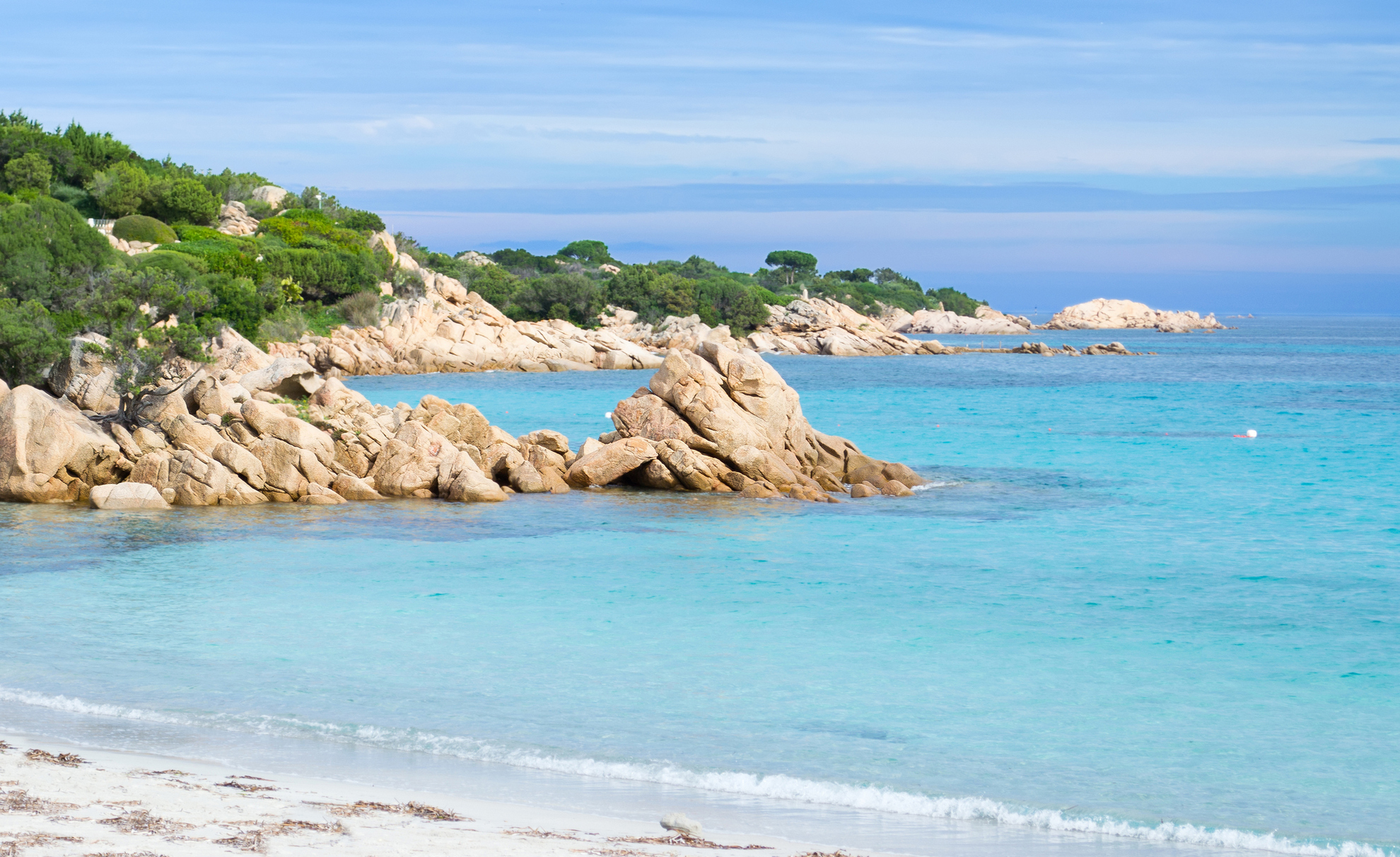
Luxury hotels and villas, sparkling nightlife, exclusive boutiques, elegant aperitifs and fine dining. The Emerald Coast is Sardinia’s most glamorous vacation resort. Two boulders bearing its name welcome you on arrival, one at the southern end on the road that goes from Olbia to the most famous places, and one at the north, on the road leading to the brilliant blue of Baja Sardinia. The Emerald Coast was born from the consortium founded by the Ishmaelite prince Karim Aga Khan in 1962, and it invites you to enjoy the fine cuisine, great shopping and the suave and luxurious lifestyle that distinguishes the heart of Porto Cervo, between Golfo Pevero, Pantogia and Capriccioli.
Its gracious architecture is characteristic: small, low, white buildings with soft lines that blend in beautifully with the surrounding Mediterranean vegetation, like the church of Stella Maris, designed by Michele Busiri Vici.
The Emerald Coast’s fame is due in large part also to some of its invaluable nearby natural attractions, like Cala di Volpe, an exclusive natural port where some scenes for the James Bond film The Spy Who Loved Me were filmed.
Other celebrated places include Grande Pevero, Liscia di Vacca, surrounded by Mediterranean brush and blessed with turquoise waters, Liscia Ruja, with its inlets framed by fragrant juniper bushes, Romazzino, with its transparent sea and white beaches, and Pitrizza.
The lovely bays with white sails draw your eyes to beaches and small islands, like the isola dei Cappuccini, Bisce island, south of Caprera, Li Nibani, Mortorio island, the little delle Camere islands and isola di Soffi. Along the coast is the Bottlenose Dolphin Research Institute, an international institute set up to study and safeguard these special dolphins.
The surrounding area is home to a variety of interesting archaeological sites like the Li Muri necropolis (in the Arzachena area) that dates to the middle of the IV century BCE, the Nuragic complexes of Malchittu and of Albucciu, which feature nuraghe, giant tombs, hut villages and the giant Coddu Vecchiu tomb (III-II millennium BCE).

Costa Verde
Costa Verde is a togetherness of vast beaches and dramatic cliffs; high dunes and sand deserts which penetrate for more than a kilometre and go down to the sea, where every morning you can meet the Sardinian deer. In the background a green Mediterranean landscape sculpted by the force of the wind that bends juniper trees to the ground. The charm of these places combined with simple hospitality; those who choose the Costa Verde know about it and do not come here by accident. Whoever dislikes organized entertainment, beach resorts and facilities, will find a spontaneous, easy-going welcome in the small family-run farmhouses and B & Bs where you can enjoy the original Sardinian lifestyle.
In spring the Costa Verde also becomes a paradise for surfers who will find the best waves to ride here; the summer lull offers an atmosphere of rare beauty, long days on the beach and postcard sunsets, among the most fascinating on the Mediterranean. This Costa is so pristine and isolated, that the loggerhead turtle lay their eggs along the Piscinas and Scivu beaches, the heart of the Costa Verde.
But the Costa is not just sea, silence and nature, but a living testimony to the extreme fatigue of the miners through the industrial archaeological monuments.
From the mines to the sea; the tracks along which the coal trucks ran from the mines of Buggerru, Montevecchio and Ingurtosu, terminate at Porto Flavia. Now they're the ruins of mines and abandoned villages, palaces and galleries that tell stories of men and fatigue, a stone's throw from the sea.
Gennargentu
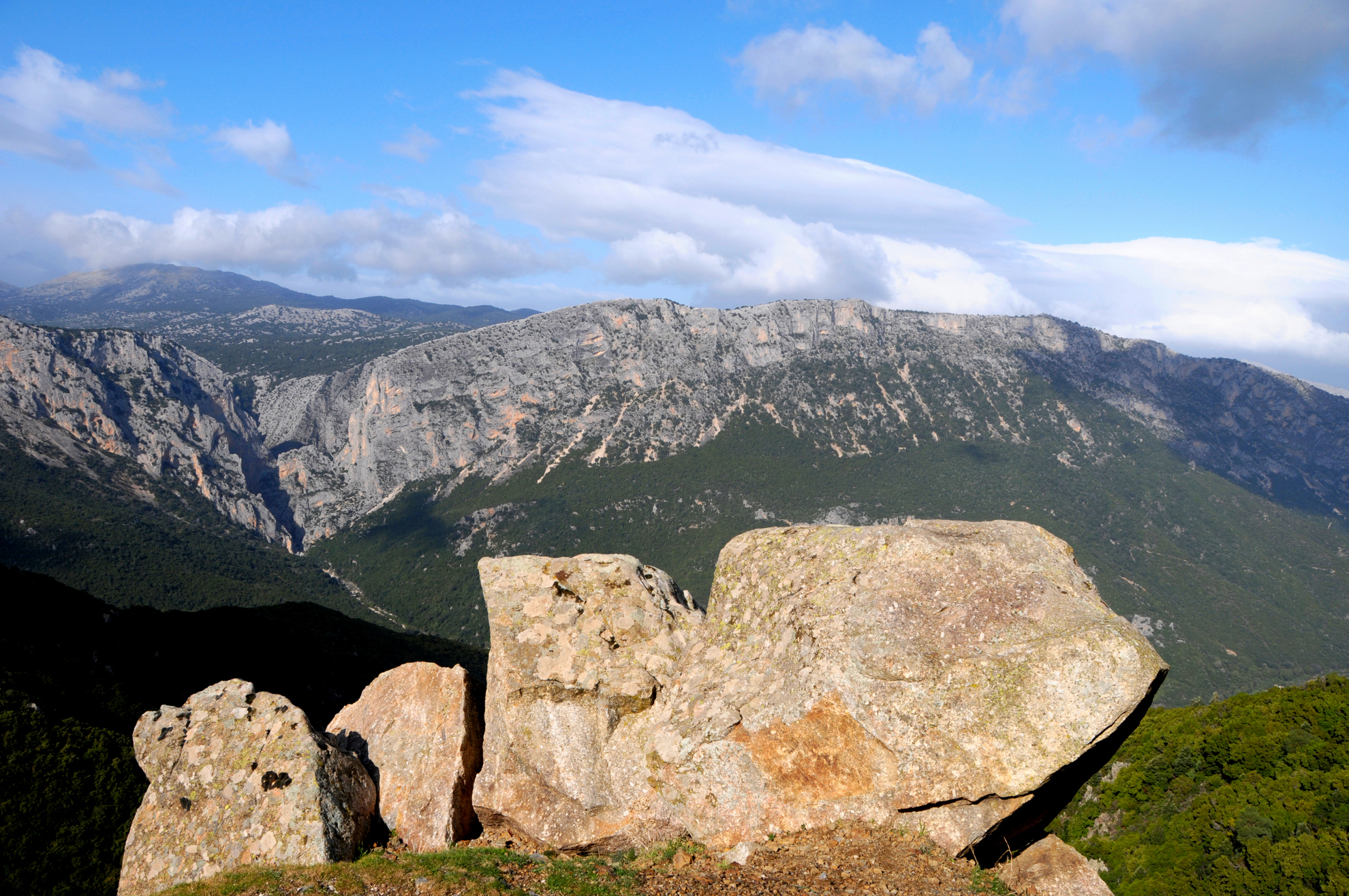
There is a massive mountain range at the centre of Sardinia, one covered in ages-old trees, the habitat of the royal eagle and the mouflon. The Gennargentu is a triumph of nature in a wild and pristine area. In spring its prairies are graced with colourful sa rosa ‘e monte, or peonies, which in Antiquity were the only flowers to bloom on Mt. Olympus. And when the many bushes of thyme begin to bloom just before summer, the air is filled with their intense fragrance. Many trails lead hikers to magnificent panoramas: go to punta La Marmora, Sardinia’s highest summit at 1834m. The Gennargentu is a fairytale land in winter, when the snow whitens the peaks and everything seems to come to a halt. Go to Fonni and catch the ski lift to the slopes of Mt Bruncu Spina and Spada.
If you really want to get to know Sardinia, then explore its villages, small gems set in the mountains, surrounded by the island’s oldest woods, sample the cuisine and experience the traditions, allow yourself to be welcomed by the locals. The warmth of their hospitality will linger in your heart. The products made in the mountains are blessed with an inimitable flavour. In Desulo it’s the chestnuts, hams and famous carapigna, a shaven ice snack that was once made with the snow preserved in the mountains. In Tonara try the delicious torrone (nougat) made with local hazelnuts, almonds, walnuts and honey. The ancient culture of these places is echoed in their traditions. Some of the older women still wear the brightly coloured garments of the past, and young women are adorned with precious jewellery, like the Sardinian wedding ring, passed along over generations. Young men test their manhood by participating in s’istrumpa, the Sardinian version of Greco-Roman wrestling that made the town of Ollolai famous, and sometimes they battle wits with improvised poetry accompanied by a choir of Tenores singers. The body of poetry that tells of the spirit of the Gennargentu is vast, but two Sardinian poets stand out above the rest: Antioco Giuseppe Casula, better known as Montanaru, from Desulo and Peppino Mereu from Tonara, who wrote numerous poems that were then set to music in such popular songs as Nanneddu Meu, su Testamentu and Galusè, a tribute to the essence of these places, to the purity of the water.
Golfo Aranci
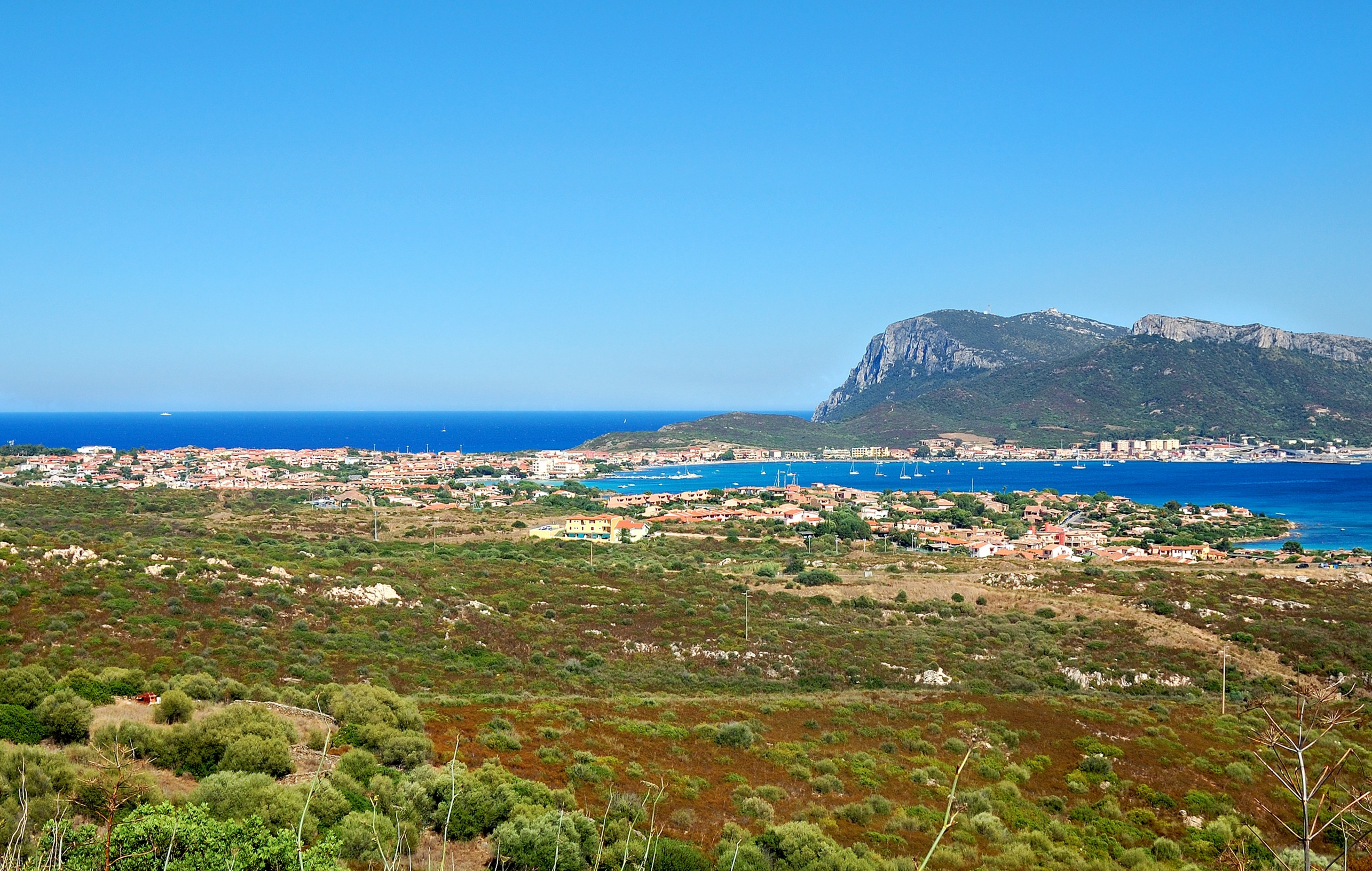
The name is a mistaken interpretation made by the cartographers in the middle of the 20th century: Gulfu di li Ranci, meaning 'gulf of the crabs', became Golfo Aranci, meaning Gulf of Oranges. Or it may come from one of the numerous coastal 'gems', namely the beach of Sos Aranzos. The village extends along a strip of land in the sea, overlooking the gulf of Olbia, that ends at the base of Capo Figari, ideal for diving - especially the Mamuthone Rock and Capo Filasca - and trekking inside a natural oasis, the habitat of mouflons and rare birds, that includes the little island of Figarolo facing it. Up above the promontory, there are wartime fortifications and a lighthouse, the ‘Naval Semaphore', famous for Guglielmo Marconi's experiments (1932). In honour of the brilliant inventor, a granite sculpture, the Column of Light, was built in the village. The area was inhabited in the Nuragic period, as is confirmed by the sacred well of Milis (7th - 6th BC), and it later became a Roman port. From the beginning of the 20th century it was a freight hub and, from the 1960s, the second port of access from the sea to Gallura. The residential area, originally a fishing village, became a Municipality in 1979 and had a population of two thousand 500 inhabitants. Tourism developed considerably here, due to its location close to the Costa Smeralda to the north and the marine area of Tavolara to the south. You can admire a village with colourful little houses, taste the Golfo Aranci cuisine with its seafood specialities and typical Sardinian dishes and you can do some shopping on the lively promenade in the village centre, where the Parish Church of San Giuseppe stands out and is a destination for worshippers of Padre Pio. The patron saint is celebrated in mid-March. The most heart-felt festivity, on 15 August (Ferragosto), is the Assumption of Mary, linked to the fish festival.
Trips via sea or on land along trails lead you to spectacular coves with heavenly beaches and sheer cliffs overlooking the crystal clear turquoise waters. There are over twenty beaches, some of which are wild and others comfortable and well-equipped, like the Cinque Spiagge (Five Beaches), little havens of fine, white sand facing the village, one following the other. Moving towards Olbia you will find the Spiaggia Bianca (White Beach), with fine sand alternated with rocks, the lovely Cala Sassari, the fabulous stretch of Nodu Pianu, separated by a small path from the wild beauty of Cala Banana, the heavenly Baia Caddinas, the fine sandy coves of Terrata, the little beaches of Baia de Bahas, the little sheltered pools and the beach of the Baracconi (little shepherds' and fishermen's huts). Not far from Porto Rotondo there is the beach of Marinella, one kilometre of gentle mounds of soft sand, smooth rocks and an emerald green sea. Around Capo Figari, you will find the fine, golden sandy little beaches of Cala Moresca, the protected reserve of Cala Greca, a beach of pink pebbles hidden by cliffs, the delightful Cala del Sonno, where the fishermen take shelter, and Cala Sabina, a sandy shore with a Caribbean appearance, which you can get to by train, which runs along the promontory. Set in the depths off the shore of the third beach, there is the MuMart, an underwater museum of contemporary art, which can also be visited when snorkeling. The Mizar submarine completes the show and, from it, you can admire an 'open sea' aquarium. Also located in Golfo Aranci, is the International Centre of Research into Dolphins, who will delight you with their acrobatics.

Golfo di Oristano (Oristano Gulf)
The Phoenicians used the gulf as their trading centre and built the wonderful city of Tharros; the most important evidence of the ancient Nuragic culture is still evident in this territory such as mysterious sacred wells, imposing nuraghi (megalithic edifices) and the fascinating Giganti (giants) of Monte’ and Prama.
The Gulf also features a sea with clear waters, protected from strong currents and winds; you can relax in this hospitable, spontaneous and familiar environment, far from the chaos of typical seaside resorts, and enjoy swimming, fishing and playing sports. It is the ideal destination for cycling holidays: little traffic and plain lands featuring a wide range of routes among, ponds, salt marshes and lagoonse.
You can discover the peaceful and uncrowded beaches of Santa Giusta stretching near the wetland that earned international importance as it is protected by the RAMSAR Convention; from the small village going along the pond, you will reach the large and solitary beaches with shallow waters surrounded by small dunes giving habitat to wild lilies.
The beach of Torregrande is among the most popular, but you will never find it crowded because it is a very long beach: in the evening, the waterfront bars and kiosks turn into venues for concerts, parties and gatherings or just a place to enjoy the sea breeze with friends.
Among the finest in the Gulf, you will discover the very quiet and peaceful beaches of Arborea with their crystal clear waters, white sand and a fragrant pine forest that offers a dash of fresh air during the hottest of summer days. This is the ideal area for those who love to go horseback riding which is also a passion of the locals and equestrian tourism lovers who will find the best riding schools and services. By riding a horse, you can go from the beaches to the lagoons where you will find nesting birds, some of which are very rare, and it is easy to bump into the flight of the pink flamingos.
Horses are the main attraction even in traditional festivals: at Sedilo in July, brave knights compete in frantic downhill race towards the sanctuary of San Costantino (Saint Constantine). In occasion of the Sartiglia, during the Carnival in Oristano, equestrian tournaments are held in which men, women and children perform with agility stunts and challenge each other trying to hit the centre of the star while running on their horses. The traditions of this Festival is repeated with the same rituals since the Middle Ages; it attracts thousands of tourists who, along with the locals, support and spur the knights that dress elegant traditional Sardinian and Spanish mountain clothes, ride on horses harnessed with coloured tassels and satins racing in exciting acrobatics and jousts.

Nuoro
Nuoro is the Athens of Sardinia, bustling with cultural life since the 1800s, home to artists like Salvatore and Sebastiano Satta, Francesco Ciusa and the author Grazia Deledda, who made the city famous the world over. A stroll through the historical centre is a relaxing pastime, a step back in time as you walk over ages-old cobblestones along streets lined with old stone houses, courtyards, porticos and little squares that seem to appear out of nowhere. Among the old quarters is Séuna, once home to farmers and craftsmen, and santu Pedru, where shepherds and landowners lived. It is here that you will find the Deledda Museum, the birthplace of the Nobel prize winner. The house is an homage to the memory of this author who opened Sardinia up to the world. She lies at rest in the little church della Solitudine at the feet of the Ortobene, city’s mountain or, as she defined it, “our soul,” a natural park well worth a visit. Corso Garibaldi used to be called Via Majore and has always been the social hub of the city, with shops and timeless cafés. Have a coffee at one of the outdoor tables there, then stroll about the narrow streets and enjoy a meal in one of the many characteristic restaurants or trattorias. Not far away is the old delle Grazie church, and the majestic Cathedral of Santa Maria della Neve. Next to it is a belvedere that leads to the Tribu cultural centre and the Ciusa Museum, home to many fascinating sculptures made by Francesco Ciusa, the first prize winner of the 1907 Venice Bienniale. The Museo d’Arte di Nuoro (MAN) is a short walk away and hosts temporary international exhibitions and permanent shows of XX century Sardinian artists. Also not to be missed is the Museum of Sardinian Life and Popular Traditions, which will give you a taste of material and immaterial culture through displays of garments, jewellery, masks, textiles, tools and references to traditional singing, religious practices and festivities. Don’t miss seeing costumes like these in actual use during the sagra del Redentore on the last Sunday of August, featuring folk groups from all over Sardinia. The celebrations include a procession of the faithful walking from the city to Ortobene, at the top of which, at altitude of about 1,000m, is the statue of Christ the Redeemer (the Redentore). The 1,600 hectares of the mountain boasts traces of settlements dating back to prehistoric times, like the domus de Janas, as well as an infinity of gorgeous scenery, like Sedda Ortai park. Granite rock formations of unusual shapes hover interspersed between valleys, the home of a variety of mammals and rare birds of prey.
Barbagia
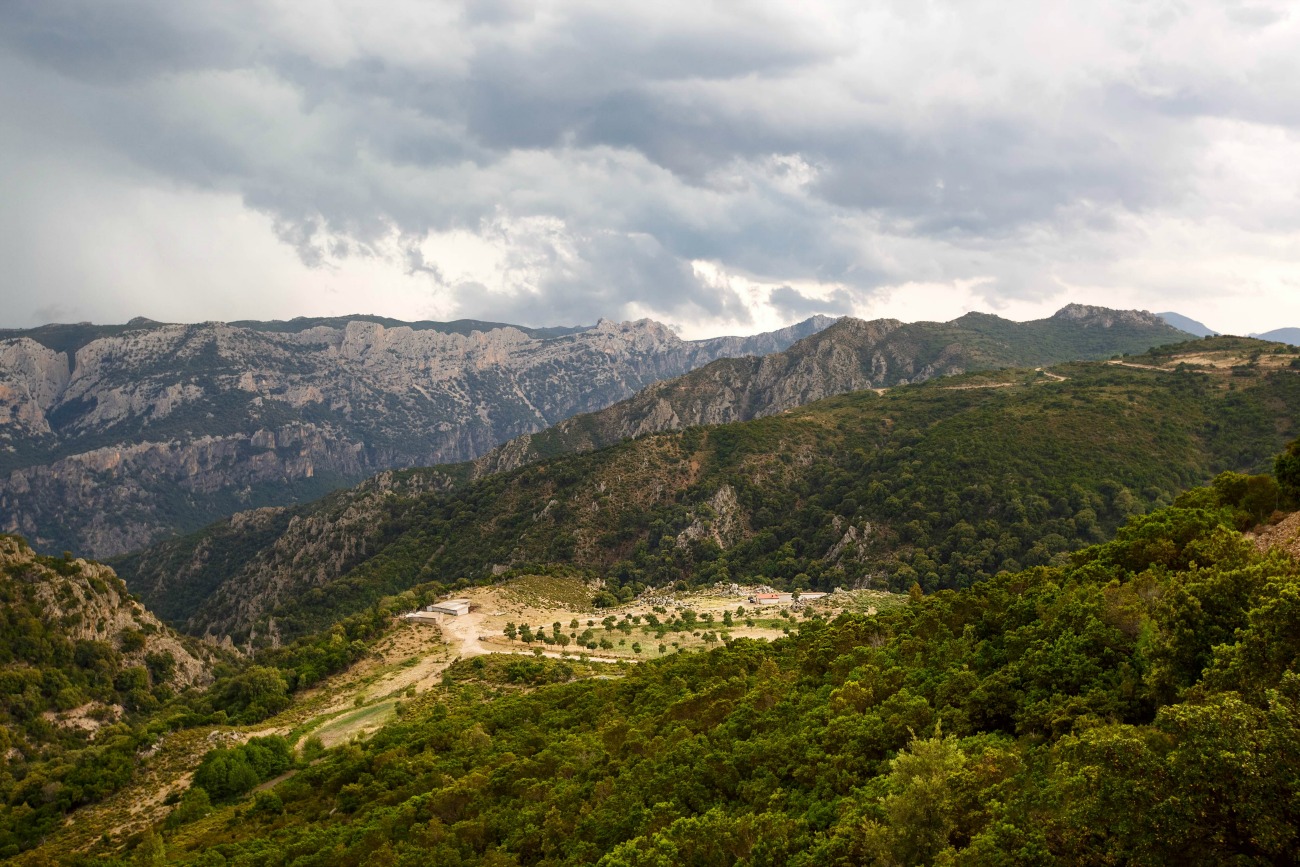
The Barbagia is the heart of Sardinia. A vast territory that encompasses the slopes of the Gennargentu, the massive mountain range at the centre of the island, and the lower peaks that surround it. The name Barbaria comes from the fact that it was here that the Sardinians took refuge as they resisted the onslaught of Carthaginians and Romans. There is, in fact, more than one Barbagia and the area is composed of various historical regions: the Barbagia of Belvì, of Bitti (the northernmost area), of Nuoro, Ollolai and of Seulo (the southernmost), as well as the area of the Mandrolisai, west of Gennargentu. You will be enchanted by the picturesque historic centres of the small towns, with their granite houses, coortes and the overhanging vines that line the narrow streets. Like, for example, at Gavoi, home of the famous Fiore Sardo cheese. At Orgosolo the streets seem to talk to you via the murales, wall paintings that tell of life, culture and local politics. The Barbagia is famous for the internationally renowned cannonau wines made at Mamoiada, Oliena and Dorgali.
If you love outdoor activity then go to the Supramonte, where the white of the rocks, the green of the vegetation and the blue sky come together with stunning chromatic beauty. At Oliena you’ll find the su Gologone springs and the valle di Lanaittu, where the island’s oldest human remains have come to light, and the village of Tiscali, where, legend has it, the last Sardinians sought refuge from invading conquerors. At Orgosolo you can go to the Montes forest and enjoy gorgeous views of the top of mount Novu santu Juvanne. You can walk all the way to the lovely Nuraghe Mereu, built with white calcareous rock, and the impressive Gorropu canyon, with 450m high walls, home of the royal eagle.
For a well-rounded understanding of Barbagian culture and tradition, visit the Museum of Sardinian Life and Popular Traditions in Nuoro. And to really satisfy your curiosity, don’t miss the carnival-like costumes, whose origins reach back to pagan fertility rites. Sheepskins, cow bells and masks depicting animal-like snouts and deformed faces symbolise the eternal battle between good and evil, life and death, the conqueror and the conquered. The most famous costumes are the Mamuthones of Mamoiada, the Thurpos at Orotelli and the Merdules of Ottana. The masks can also be seen at the museum of the Maschere del Mediterraneo in Mamoiada. Another local tradition is Tenores chant-like singing, which has earned a well-deserved place on the UNESCO Intangible World Heritage list. Its origins date back to time immemorial, when shepherds far from home in winter would gather around a fire and sing. If you miss hearing a live performance, you can listen to historic renditions at the Museo multimediale del Canto a Tenores in Bitti.
Sinis
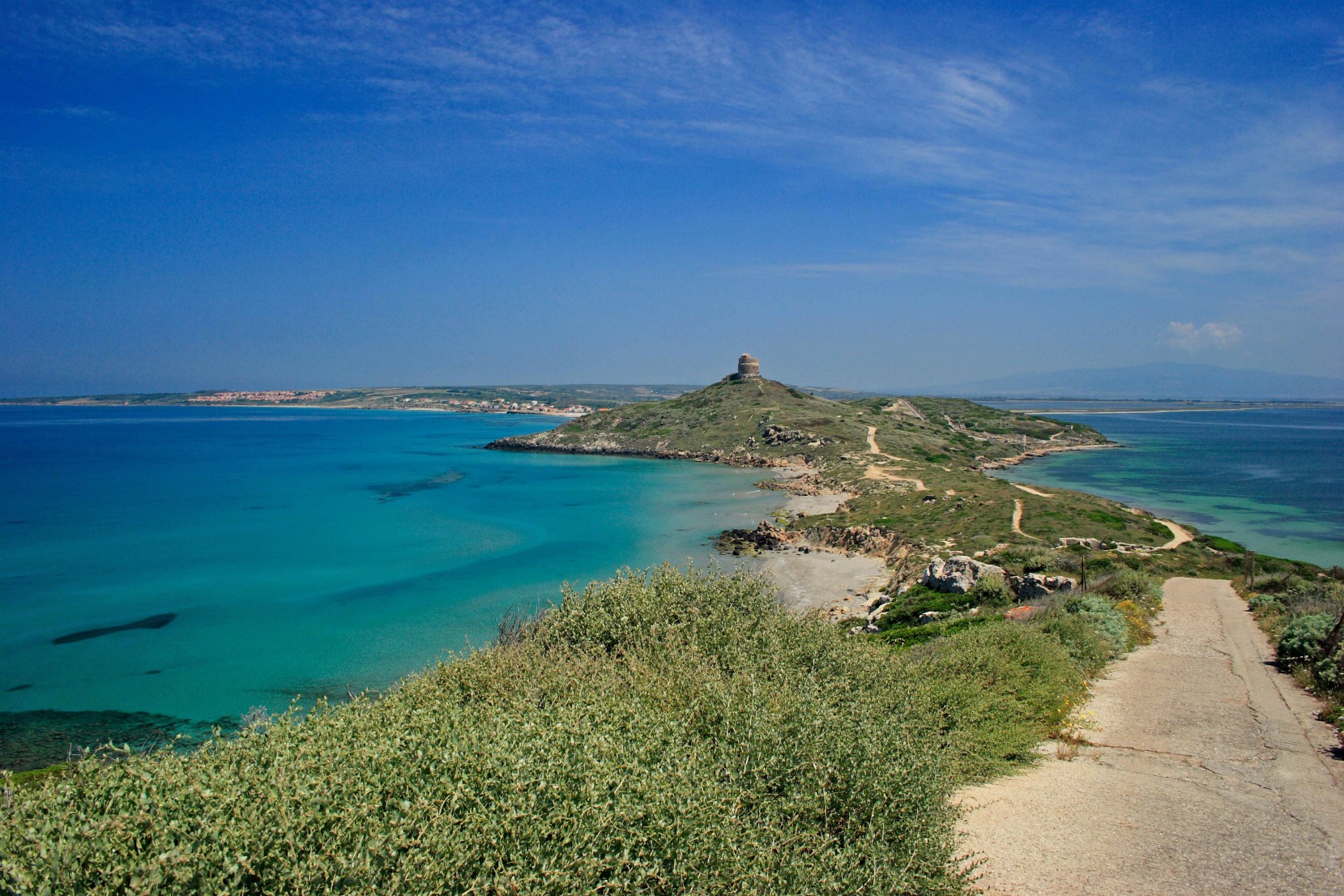
The Sinis is a natural paradise where remarkable cultural evidence is widespread. It is the place where a farmer, ploughing his land at Monte’e Prama, discovered the Giganti (Giants): dozens of extraordinary stone colossi dating 3,000 years back and which can now be admired at the Museum of Cabras.
Remarkably intact natural ecosystems are concentrated in the small Sinis area making this territory even more impressive; it features alternating landscapes of sea water and lagoons, sand dunes and unique beaches such as Is Aruttas; the sand is incredibly white, almost blinding, as it is formed by transparent grains of quartz and veiled with blue due to the reflection of the sky and the sea. This is how the Sinis appears before you: shining and peaceful beaches where often a cordon of dunes separates them from a rich network of salt marshes and ponds. The largest is that of Cabras surrounded by several smaller ones. The colours that characterise the lagoons change colours, from white of the beaches to green, violet and red of the algae: silence becomes the speaker of the many adorable cormorants, herons, hawks, kingfishers and pink flamingos that live and breed in thousands. All this represents a feast for birdwatchers and for those who love horseback riding between the sandbanks that separate the waters from the ponds.
Small towns and villages give a special character to the Sinis; there is a surrealistic wild west-style village in front of the beaches with low houses and unpaved roads which come alive for the patron feast; for nine days, around the Church of San Salvatore, folk dances, roasted porceddus (piglet pork meat), mullet and fregola sarda (Sardinian pasta) hand made with semolina flour and cooked over low heat with local clams, are the main attractions. Don’t miss the delicious mullet roe, fished in Cabras and prepared with same technique handed down from the Phoenicians. But the symbol of the Feast is the corsa degli scalzi, reminiscent of the ritual running barefoot holding the simulacrum of the Saint to be protected from the invading Saracens taking it from the small village of San Salvatore to Cabras.
The village of San Giovanni di Sinis, with its old wooden shacks and rushes used by locals during the summer months, is located on the very tip of the peninsula. Among these humble dwellings, there is the oldest church in Sardinia; thanks to the enchantment that surrounds it, the small church of San Giovanni seems to be wrapped in a mysterious charm, the same which is found in the Punic city of Tharros, just a short walk from here. Just a tip... come here at sunset.

Chia
The ancient village of Chia, an important Phoenician and then Roman centre named Bithia, was in a small cove where today there is one of the many coastal towers built in the seventeenth century by the Spanish crown against the incursions of the Barbary pirates. Among the ruins brought to light following a storm, there are the remains of a Punic Tophet and the ancient road that connected it to the important city of Nora. Today it is the destination for trekking and mountain bike enthusiasts who can travel the dirt road that runs along the old road, enjoying particularly fascinating coastal stretches.
From the tower, overlooking the coast, there is access to a long stretch of sand interspersed with small coves framed by dense vegetation and lapped by an emerald-green sea, a true spectacle of nature that remains forever in the hearts of any visitor.
Along the coast to the west you pass the beaches of Sa Tuerra, Porto Campana Spiaggia de su Sali, and Su Giudeu the most beautiful of all. Also known as the spiaggia de s'Abba Durci (fresh water beach), it is a long stretch of white sand surrounded by high dunes covered with juniper trees, which, with their shapes create a particularly evocative landscape.
On the back of this stretch of coastline lies the Spartivento pond, precious natural oasis habitat for many animal species. In front of the beach of Giudeu, a short distance from the shore, there is an island within easy reach due to shallow waters that separate it from the mainland. Thanks to its special charm, this beach is often chosen as a natural backdrop for films and TV commercials.
On the westernmost part of this coast is the Cala Cipolla beach. Only accessible on foot, it extends around a small cove sheltered and enclosed by a rocky promontory that separates it from the more extensive coastline. From Cala Cipolla there is a scenic path that lets you reach the Faro di Capo Spartivento, whose summit dominates the whole southern coast of Sulcis.
With their shallow waters, all the beaches along the Chia coast are particularly frequented by families with children and by underwater fishing and diving enthusiasts. Often beaten by the mistral wind, Chia is also an ideal destination for surfers who can perform spectacular stunts. Rich in tourist services, these beaches are accessible to the disabled and have ample parking.