Four villages, heart of the Island
‘Worlds’ that resist the passing of time, in an ancient and always vibrant land


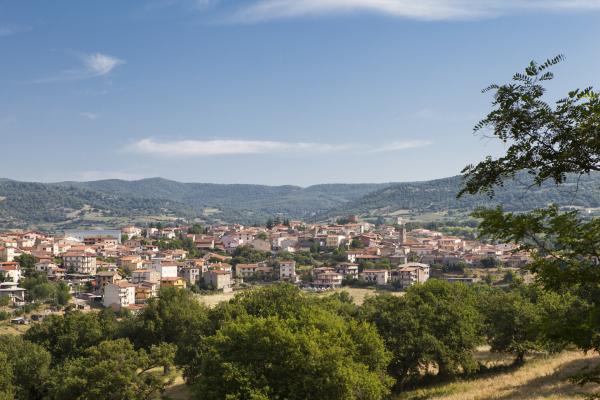
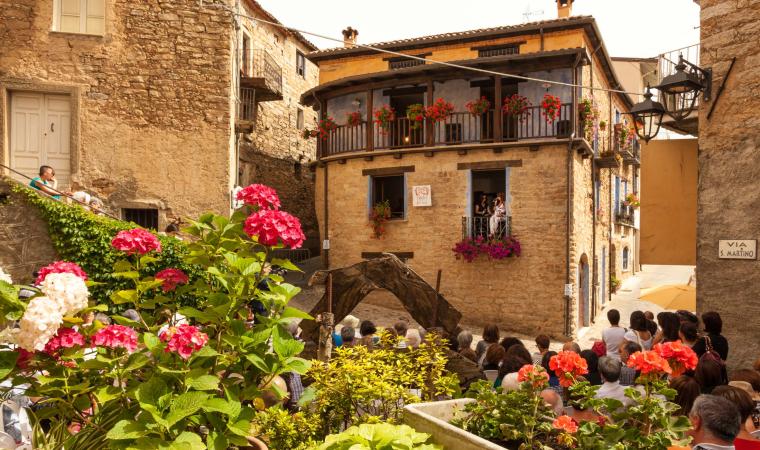
In the evening, a few artificial lights emerge in immense spaces, peaceful and silent, beyond the coasts. They indicate a few small towns and, above all, the numerous little villages that exude authentic charm, ancient traditions and original cultures. Don't expect a spectacular wow effect, like when faced with the unparalleled beauty of the Sardinian sea, as these places have a discreet and reserved charm that cannot be grasped at first glance by a passing visitor. You have to stop for a first-hand experience of how ‘life in the past' found solid roots in the alleys and in the people who live there, thus remaining as it was originally. It is imprinted on the stones of the houses, in daily gestures, in the expressions of pure humanity on the faces of the people you will meet in the Island’s inland villages, which are part of the ‘club dei borghi più belli d’Italia’ (association of the most beautiful villages in Italy).
In his nineteenth-century travel chronicles, the caustic Valery wrote: “the healthiness and the lightness of the air in Tempio have brought about the health, freshness, strength, beauty, courage and intelligence of the inhabitants; like those in Gallura, they are in every respect the most famous on the Island”. It seems like an invitation to go and see if anything has changed since then with your own eyes. Well, it is rumoured to be so around here, obviously for the better.

Once upon a time, there was a steam train that travelled to inaccessible places in central Sardinia. From the windows, you could see horses crossing endless fields with limestone boulders, the local stone, on their backs. Intellectuals from all over Europe travelled in the carriages, along with local people, with the desire in their souls to explore remote lands. They described the stop in Sadali as an arrival in an enchanted village of caves and waterfalls. Some things have changed since then, but without sacrificing the emotions of that ancestral journey, now aboard the Trenino Verde tourist train.

If you are in love, you will probably return home from this village with a wedding ring on your finger. In fact, there is no place that better embodies the ideal destination for saying ‘I do' than this tiny and semi-deserted village of small stone houses, inhabited by a handful of elderly people. Life, which seemed to be gone, has returned to embrace the wishes of those who want to celebrate their special day in this place where every view oozes with emotion. Its fate was written in Its name, which is Lollove.

Early 20th-century artists and photographers, visiting Atzara, were amazed by the bold way in which women of all ages dressed in this little village: daring combinations by fashion designers, brocades, coarse woollen fabric, silk and embroidery, as well as bright colours in overlapping shades and unusual headgear never seen elsewhere. Today, very few of these clothes are seen anywhere around and are mainly worn for parties, but when you see them in the murals and at the museum of contemporary art, you will experience the same sensations as the artists from the past.