The high plains of Monte Acuto, on the southern slopes of the Limbara range, are home to the remains of defensive fortresses and strategic outposts from early medieval times. Wounded during fierce battles and marked by the passage of time, Monte Acuto Castle sits at 500 metres in the Berchidda region and is a fine example. First documented after the XIII century, it enjoyed its most flourishing period when it was the seat of Giudicessa Adelasia di Torres and of archbishops, prelates and a variety of dignitaries. The castle was vied for first among the guidicati, and then fought over by Pisa and Genoa. It remained a vital structure until the Catalan-Aragonese conquest, after which it began to fall into disuse and declined to its current state. Perched on high, it watched over the roads travelled by convoys along the Mannu river valley, where merchandise was carried towards Terranova Port, modern-day Olbia, and connected with the Upper Gallura.
The high plains of Monte Acuto, on the southern slopes of the Limbara range, are home to the remains of defensive fortresses and strategic outposts from early medieval times. Wounded during fierce battles and marked by the passage of time, Monte Acuto Castle sits at 500 metres in the Berchidda region and is a fine example. First documented after the XIII century, it enjoyed its most flourishing period when it was the seat of Giudicessa Adelasia di Torres and of archbishops, prelates and a variety of dignitaries. The castle was vied for first among the guidicati, and then fought over by Pisa and Genoa. It remained a vital structure until the Catalan-Aragonese conquest, after which it began to fall into disuse and declined to its current state. Perched on high, it watched over the roads travelled by convoys along the Mannu river valley, where merchandise was carried towards Terranova Port, modern-day Olbia, and connected with the Upper Gallura.
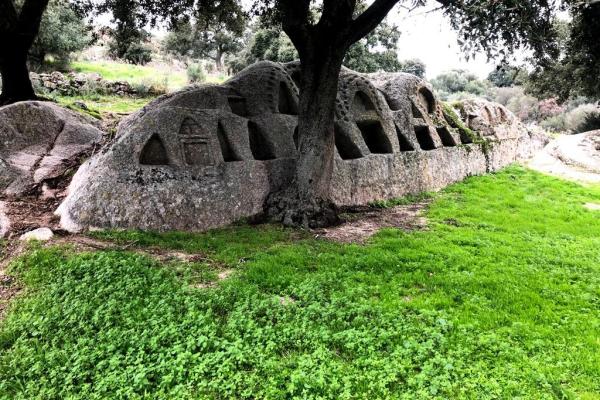
In order to get an idea of life at the castle you have to get through thick vegetation amongst which you’ll find a variety of pre-Nuragic and Nuragic sites: dolmen and menhir, huts and megalithic walls bear witness to the prehistoric remains you’ll come across along the trails. As you continue your ascent, you’ll see a sort of outpost, a guard tower, round, located a short distance from the fort. The castle’s main body, which seems to have had an elongated oval shape, is home to the remains of the walls. Tiles and bits of ceramic vases were found here too. At the top you’ll find the remains of a square room, the base of the tower (now gone), and next to that a partially interred cistern. From up here you can see the other systems of elevated outposts, each one visible to the other. You will go back to the life at the castle, imagining the chain of coded light signals created using metal items or mirrors that passed from one outpost to the other, or with bonfires when needed during the night.
After your trip to the castle, go and explore the many attractions in Berchidda, a lovely city with houses and neo-Classic palazzi set along narrow streets surrounded by a granite landscape shaped by the passage of time, dotted with oak and cork woods and Lake Coghinas. At Berchidda you can enjoy traditional cuisine, like the suppa cuatta, fine cheeses, sweets made with almonds and Vermentino wine. In mid-August they have the world famous Time in Jazz festival. In the town centre you can visit the church of San Sebastiano and the XVI century church of the Rosario and the wine museum at the feet of Sant’Alvara hill. In the surrounding countryside are prehistoric and Roman remains, like the bridge over the Silvani river.