Forest
Uatzo
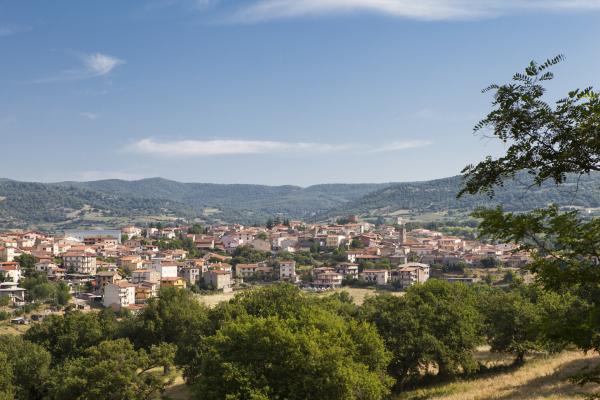
This immense green expanse in the centre of Sardinia is a naturalistic ‘jewel’ within the territory of three Barbarian municipalities that embellishes the Gennargentu massif

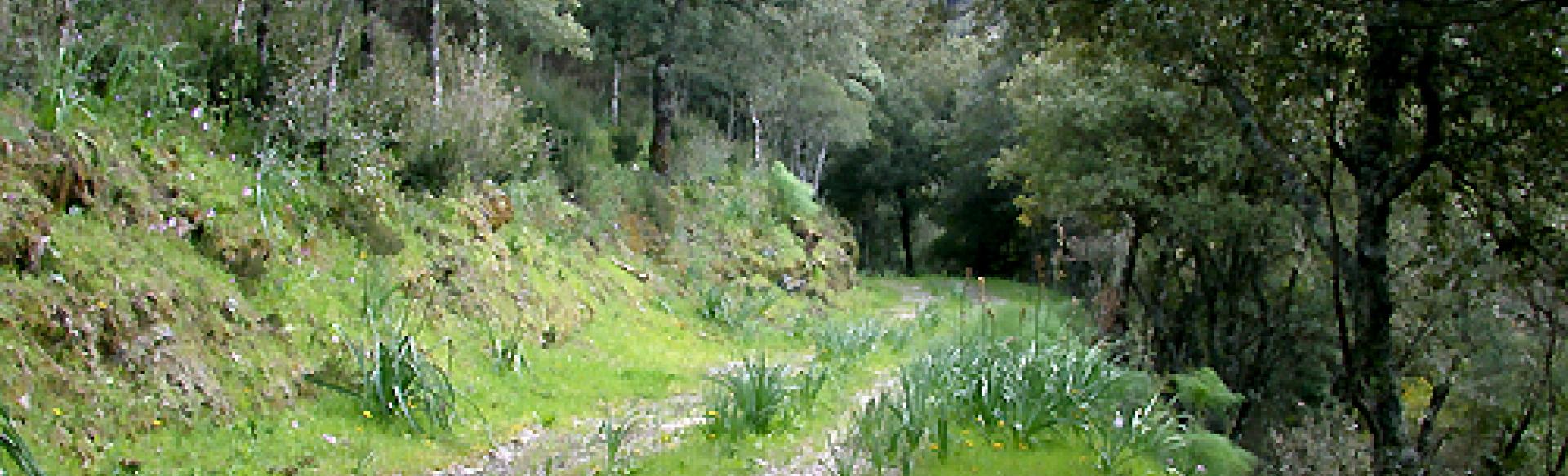
It is characterised by a unique distinctive feature: it is crossed by the tracks of the Trenino Verde, on board of which you can visit the northern stretches, where this ‘Green Train’ follows a panoramic turn that offers beautiful views, especially in autumn, including steep valleys dotted with the colours of nature. The Uatzo forest is an enormous expanse of conifers, holm oaks, cork oaks, downy oaks and chestnut trees that are perfectly linked to the large expanses of Mediterranean scrub, together covering around 800 hectares of hills and mountains within the Gennargentu park. The territory, a typical area of transition from evergreen and deciduous vegetation of Boreal origin, falls into the municipalities of Belvì, Sorgono and Tonara and is composed of porphyry and schist rocks, dating back to the Paleozoic period. Its peak is Conca Giuanne Fais (at 1,500 metres), with other significant peaks being Bruncu Istiddì and s'Arcu sa Frucca, which rise up thousands of metres. Many streams, some of which are ‘seasonal’ in nature, cross the woods, with Rio is Putzos as the main waterway in Uatzo, being a stand-out. A parallel route runs along the river, with picnic and rest areas.
This is an ideal place for families wanting to take relaxing walks, for lovers of trekking and birdwatching, with its huge oasis offering beautiful views and crossed by the Trenino Verde
The forest of Uatzo is reached along the SS 295, on the stretch between Belvì and Tonara, at the station of Desulo - Tonara. Go along a forest track for around 2 kilometres before entering the forest complex and go on for around 5 more kilometres to reach the visitors’ centre.